
E-bike charging points
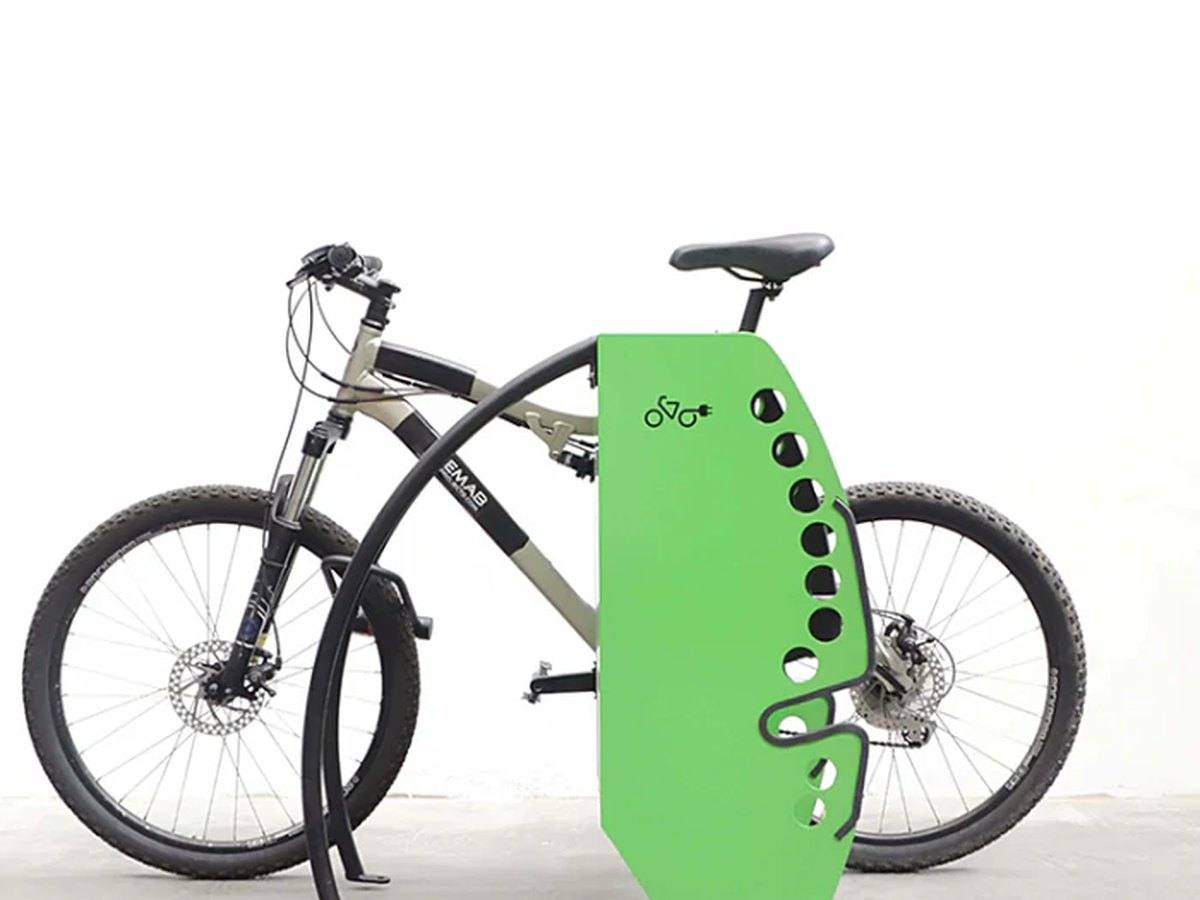
Charging points for electric bikes, integrated into the shelter or standalone. Increasingly a requirement rather than an extra.
Our approach
- 1Advice
We listen, measure up and think along.
- 23D design
Realistic visualisations for approval.
- 3Production
Custom work in our own workshops.
- 4Installation
Expert installation on site.
- 5Maintenance
Long-term service and maintenance.
What this gives you
From first sketch to maintenance — one partner who handles everything in-house.
One partner, from A to Z
You call one number. We measure, design, produce, install and maintain. No fragmented responsibility, no waiting on subcontractors pointing at each other.
You see it before it exists
A 3D visualisation of your own façade or space, by day and by night. We only start producing once that image is right. No surprises afterwards.
In-house production in Olen
Custom work from our own workshops, without intermediaries. That means a shorter lead time, a sharper price, and changes that are genuinely still possible.
Built to last
ISO 9001 and ISO 14001. Colourfast, weather-resistant materials and energy-efficient LED lighting. With long-term service and maintenance.
Charging points for electric bikes
The share of electric bikes in commuter traffic keeps rising, and with it the demand for somewhere to charge at the destination. For municipalities, companies and tourist sites a charging point has become less of an extra than a condition: those who do not have one see cyclists ride on, or find them plugged into an extension lead against the facade.
We supply and install charging points for electric bikes, standalone or integrated into a bicycle shelter, for municipalities, companies, care institutions, schools, hospitality businesses and tourist destinations.
The formats
Socket column with lockable compartments
Each compartment holds a socket and closes with a key or a code. Users put their own charger and battery inside and lock it. Simple, affordable and compatible with every make of bike, because the user brings their own charger. This is the most frequently chosen format.
Socket in the shelter
Sockets built into the bicycle shelter itself, so the bike charges while it is parked. Practical, but the battery then stays on the bike, and that is not desirable everywhere.
Fast-charging point with built-in connectors
With a set of common connectors so users do not have to bring a charger. More convenient, but the number of makes and connectors on the market makes full coverage impossible.
Column with payment or registration
For locations where use is charged or logged.
Standalone solar-powered column
For locations without a mains connection, such as junctions on cycle routes and nature reserves.
Fire safety: what it really comes down to
Lithium batteries on charge demand attention. This is the point on which we ask the most questions, because it is expensive and sometimes impossible to correct afterwards.
- Every charging point should have its own protection, with correct residual-current protection and a fuse per bay, so that one fault does not take down the whole installation.
- Charging compartments are preferably made in metal rather than plastic, and separated from one another.
- Stricter conditions apply in an enclosed indoor space than outdoors. We advise against placing charging points in a closed cellar or storeroom without specific measures.
- Provide ventilation and, on larger installations, detection.
- Agree in advance who arranges the electrical inspection and who checks the installation periodically.
We raise these points explicitly during the design, even when nobody asks about them.
Installation and connection
The connection often determines the cost more than the column itself. If a supply is already nearby, the installation work is limited; if a trench has to be dug across thirty metres under paving, that becomes the largest item.
Visibility counts as well - a charging point nobody sees does not get used - and so does how safe the location feels, because users leave valuable batteries behind. Lighting and a clear view from a well-used walking route help.
Management
Decide in advance how you manage the keys or codes, who collects a forgotten battery, and whether use is free of charge. A system with codes or an app removes the key management but adds a subscription. We set out that trade-off for your situation.
What determines the price?
Charging points have no fixed price per bay. The cost follows from the type of column and the number of charging bays, the locking or access system, the protection per bay and the specification of the charging compartments, whether an electrical supply is present and how far away the connection point is, the groundwork, the foundation and anchoring, and any solar power or registration software.
Send us the location, the number of bays you want and the distance to the nearest supply, and you will receive a quotation in which those items are shown separately.
Putting your location to us
Send us a site sketch or a few photographs. We come and look, indicate what is safe and practical, and then propose a version.
Projects
All projects
Frequently asked questions
Hoeveel plaats heb ik nodig per fiets?
Fietsbeugel of fietsenrek — wat kies ik?
Zijn dubbellaagse rekken gebruiksvriendelijk?
Zijn er subsidies voor fietsenstallingen?
Didn't find what you were looking for?
What you see here is a selection. Our range is considerably wider — in sizes, materials and finishes that we cannot all show online. Tell us what you need it for and where it has to go, and we will work out what fits.
Ask your questionReady to start your e-bike charging points project?
We think along from the first sketch through to installation and maintenance.