Display board – direct print
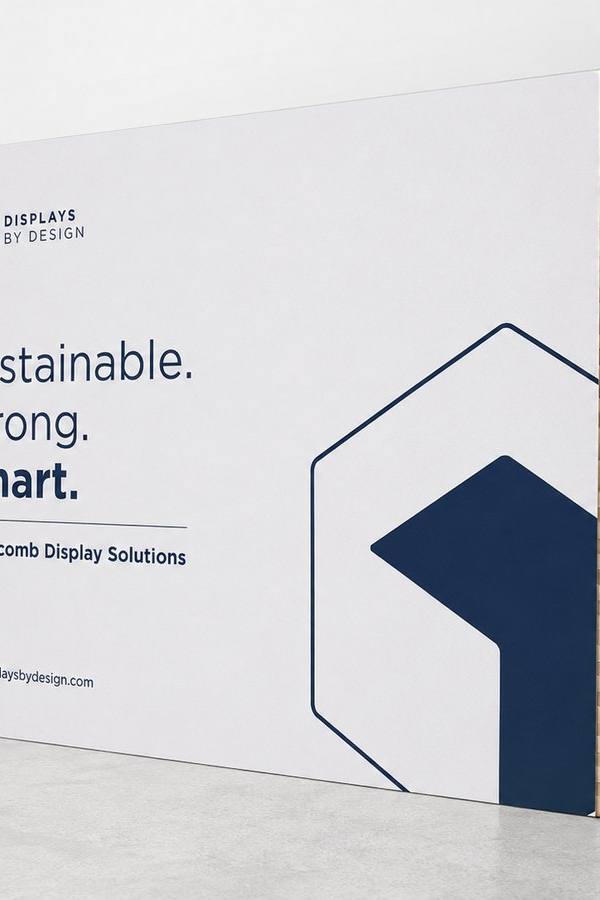
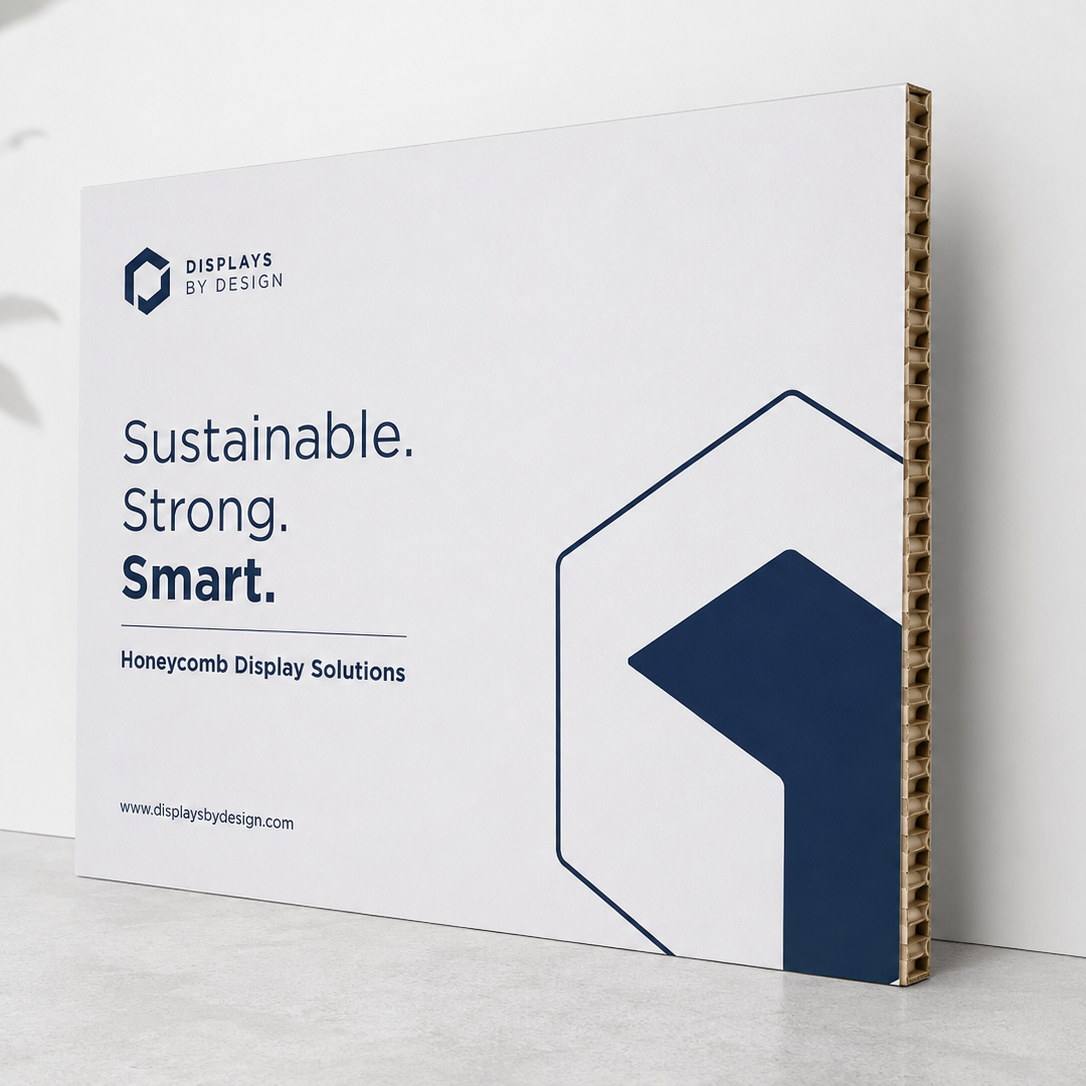
Sturdy honeycomb cardboard panel with direct print. Light, recyclable and ideal for temporary displays and stands. Indoor use only.

Reboard is cardboard — but cardboard that stands up. A corrugated core between two smooth sheets: light, strong enough for large panels, and fully recyclable. For communication that only has to last a season, it is often the most sensible choice.
Sturdy honeycomb cardboard panel with direct print. Light, recyclable and ideal for temporary displays and stands. Indoor use only.
From first sketch to maintenance — one partner who handles everything in-house.
You call one number. We measure, design, produce, install and maintain. No fragmented responsibility, no waiting on subcontractors pointing at each other.
A 3D visualisation of your own façade or space, by day and by night. We only start producing once that image is right. No surprises afterwards.
Custom work from our own workshops, without intermediaries. That means a shorter lead time, a sharper price, and changes that are genuinely still possible.
ISO 9001 and ISO 14001. Colourfast, weather-resistant materials and energy-efficient LED lighting. With long-term service and maintenance.
Reboard is a panel material with a honeycomb or fluted core between two smooth facings. That build-up gives it the rigidity of a panel at a fraction of the weight, and makes it fully recyclable with ordinary paper waste.
In the market it turns up as honeycomb board, honeycomb card, display board or under manufacturers' brand names. It is always the same principle.
Reboard is the material of the temporary installation. Floor-standing displays in a shop, counter displays, exhibition stands, decor walls, product presentations and seasonal campaigns. Anywhere something has to stand for a few weeks to a few months, look good, and then go.
It is also increasingly chosen by organisations with a sustainability policy: a card display that goes into the paper recycling afterwards is a different story from a plastic panel that ends up in general waste.
That is the question everybody asks, and the answer usually surprises. A well-made honeycomb panel carries a considerable load in compression, easily enough for most displays and even for light furniture. Where the material is vulnerable is moisture and impact on the edge. A display standing outside in the rain, or taking a daily knock from a shopping trolley, is not what it is made for.
Because it is light and soft, reboard cuts freely. Contour cutting, cut-outs, slot joints and fold lines are all possible, which allows constructions that assemble without screws or glue. A display delivered flat that stands up on site in five minutes saves transport and assembly time.
We print directly onto the panel. The facing is matt and takes ink evenly, which gives a calm image without reflection — an advantage in shops with a lot of spot lighting.
Size and panel thickness form the baseline. After that, cutting counts above all: a rectangular panel is one thing, a cut-out silhouette with fold lines and slot joints is another. Quantity weighs heavily, because a one-off design and a cutting die fall entirely on a single item and barely register across a hundred. And finally, whether it is printed single or double sided.
For anyone hesitating between card and plastic, the question is rarely which panel costs less, but how long the thing has to stand and what happens to it afterwards.
We print, cut and deliver flat packed with an assembly sequence included. If you do not have a design yet, we draw the construction with you: tell us what has to go on it, where it will stand and how long it stays, and we will propose the panel thickness and the build-up.
What you see here is a selection. Our range is considerably wider — in sizes, materials and finishes that we cannot all show online. Tell us what you need it for and where it has to go, and we will work out what fits.
Ask your questionWe think along from the first sketch through to installation and maintenance.