Fabric frame – wall
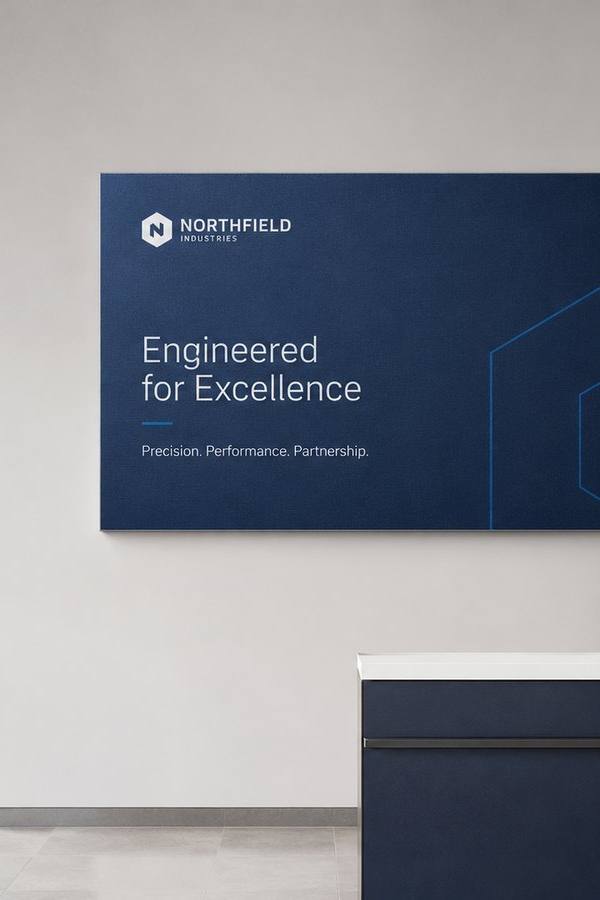
Fixed to the wall. The most common version — for reception areas, corridors, shops and offices.

A fabric frame is an aluminium profile in which a printed textile is tensioned with a silicone edge. The result is a seamless, perfectly flat image with no visible fixings. And for a new campaign you pull the fabric out and push a new one in — no tools, no dismantling.
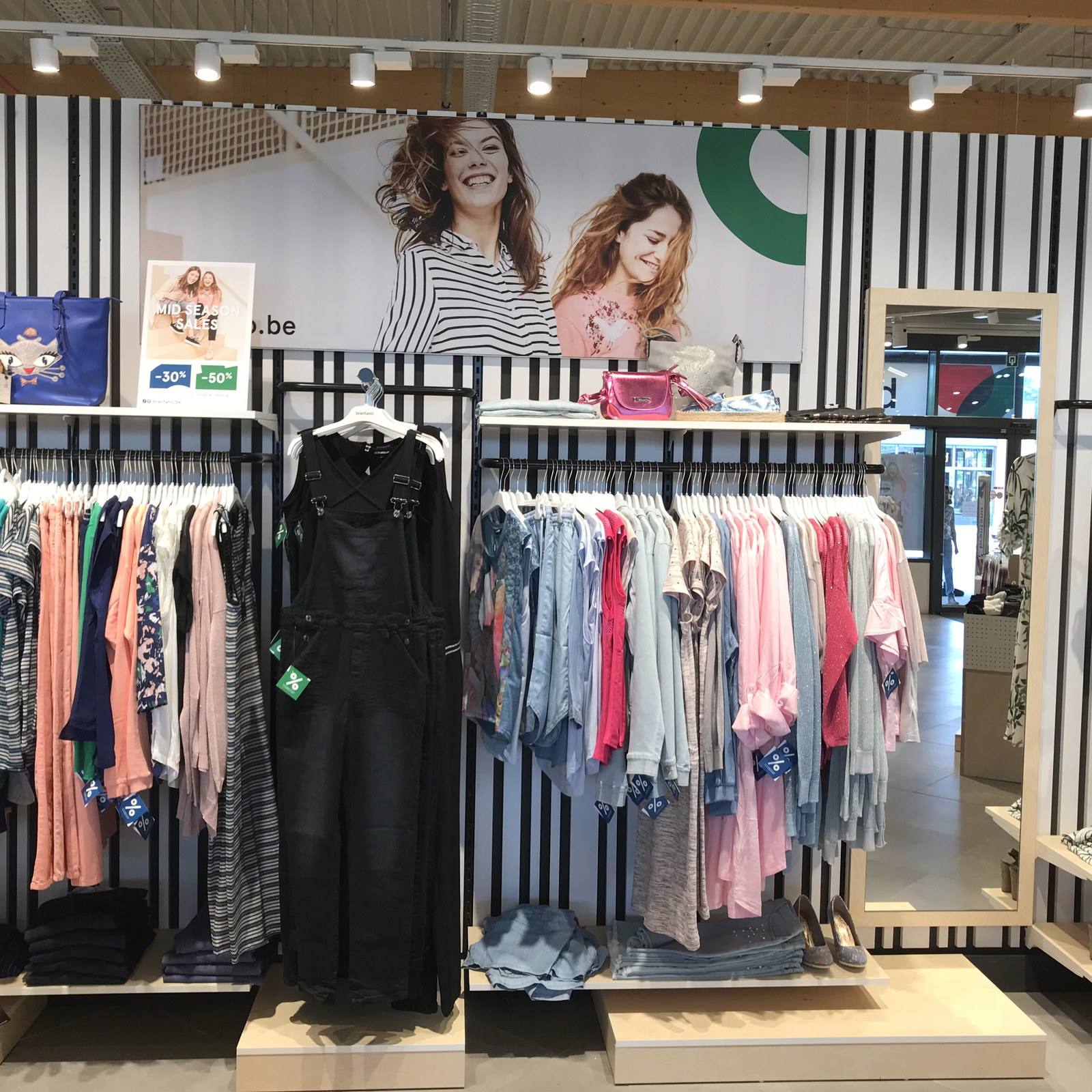
Fixed to the wall. The most common version — for reception areas, corridors, shops and offices.

A system for covering entire walls with tensioned textile.
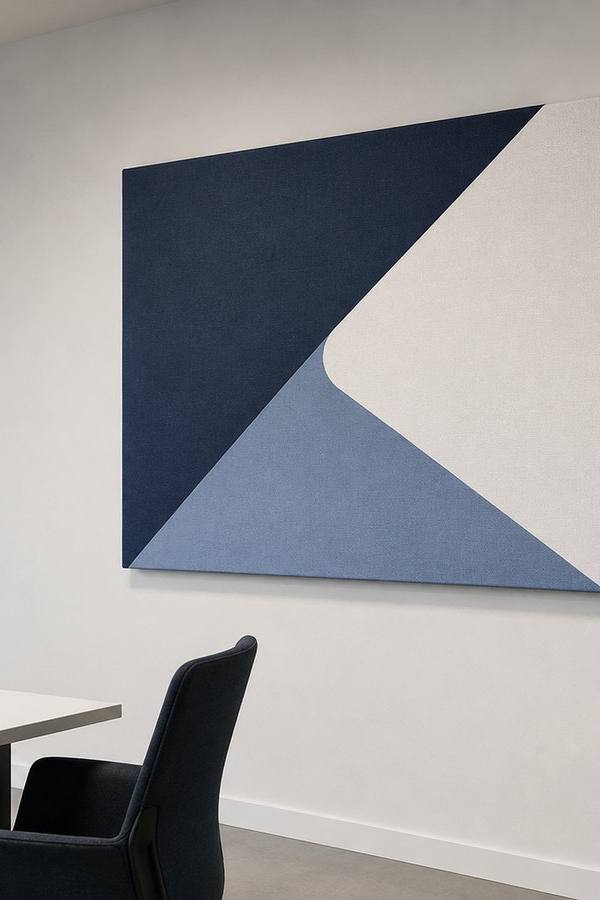
Fixed to the wall. Acoustically the most effective version, because the strongest reflections usually come from the walls.
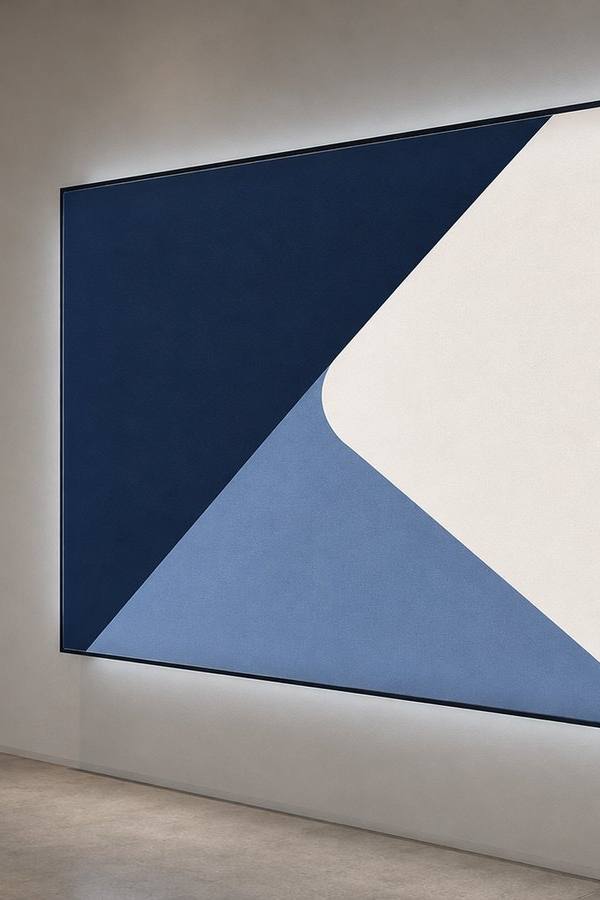
Illuminated fabric frame (lightbox) with a taut, translucent textile. Draws the eye at reception, in retail and at trade fairs.
From first sketch to maintenance — one partner who handles everything in-house.
You call one number. We measure, design, produce, install and maintain. No fragmented responsibility, no waiting on subcontractors pointing at each other.
A 3D visualisation of your own façade or space, by day and by night. We only start producing once that image is right. No surprises afterwards.
Custom work from our own workshops, without intermediaries. That means a shorter lead time, a sharper price, and changes that are genuinely still possible.
ISO 9001 and ISO 14001. Colourfast, weather-resistant materials and energy-efficient LED lighting. With long-term service and maintenance.
A fabric frame is a slim aluminium profile in which a printed textile is tensioned. The fabric has a keder along its edge, a silicone cord that slides into a groove in the profile. As a result the image runs right into the edge and there are no screws, clamps or trims in sight.
The market knows it as a fabric frame, tension frame, keder frame, SEG frame or textile frame.
A textile print does not reflect. In an office with plenty of downlights, or in a showroom with a lot of glass, that is the difference between an image you can read and an image you have to stand at an angle to see. Textile also dampens sound a little, although for that you are better off looking at the acoustic version.
The third argument is practical: a fabric can be swapped without touching the frame. New campaign, new image, same frame on the same wall.
A wall frame sits against a wall and holds the fabric a few centimetres off the surface, which gives depth. A suspended frame hangs from cables or from a truss and is usually double sided, so it works from both directions. A free-standing frame has its own feet and acts as a room divider, a backdrop or an announcement.
In an illuminated version, LED modules inside the profile light the fabric evenly from within. The image becomes soft and uniform, without the hotspots you see on cheap light boxes. That makes it suitable for reception areas, shop interiors and anything that has to work in the evening as well.
The fabric can be taken out of the frame and washed. That is not a detail: in a shop or a restaurant a wall image is dusty after a year, and a panel you cannot clean is a panel you replace.
The size sets the baseline. After that it depends on the version: wall, suspended or free-standing, single or double sided, illuminated or not, and the profile depth that goes with the span. The number of fabrics per frame counts too, as does whether we come and install.
Anyone who treats the frame as an investment and the fabrics as a consumable usually arrives at the right choice: better one solid profile than a whole new unit every couple of years.
We supply the frames, print the fabrics with the keder finish that matches the profile, and install. Tell us where the frame will go, what size you have in mind and whether it has to be illuminated, and we will propose the version that fits.
What you see here is a selection. Our range is considerably wider — in sizes, materials and finishes that we cannot all show online. Tell us what you need it for and where it has to go, and we will work out what fits.
Ask your questionWe think along from the first sketch through to installation and maintenance.