
Roll-up banners
Roll-up banners, up and away again in seconds. The versatile classic for reception, trade fair and event.
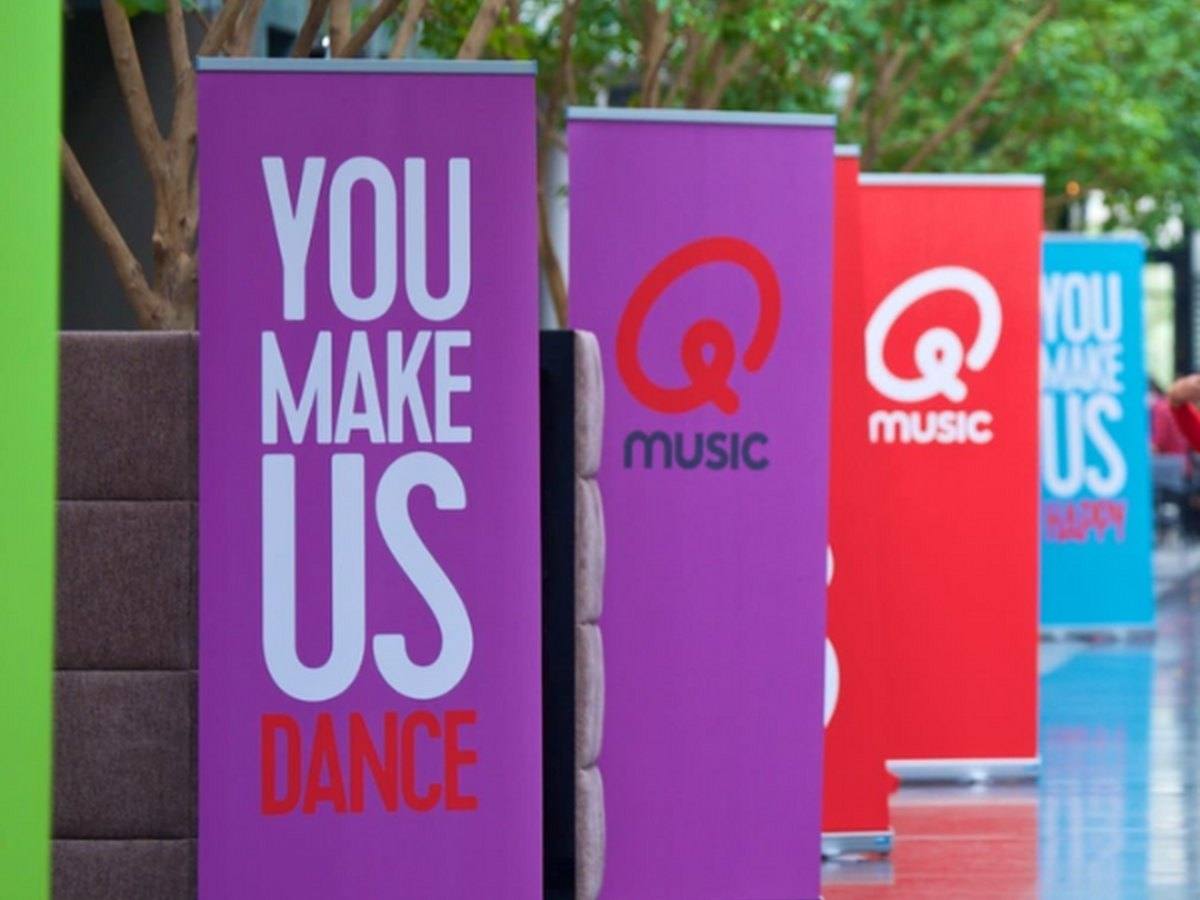
Alle roll-up banners
Prijzen zijn beschikbaar in het Herva-Doublet Platform.
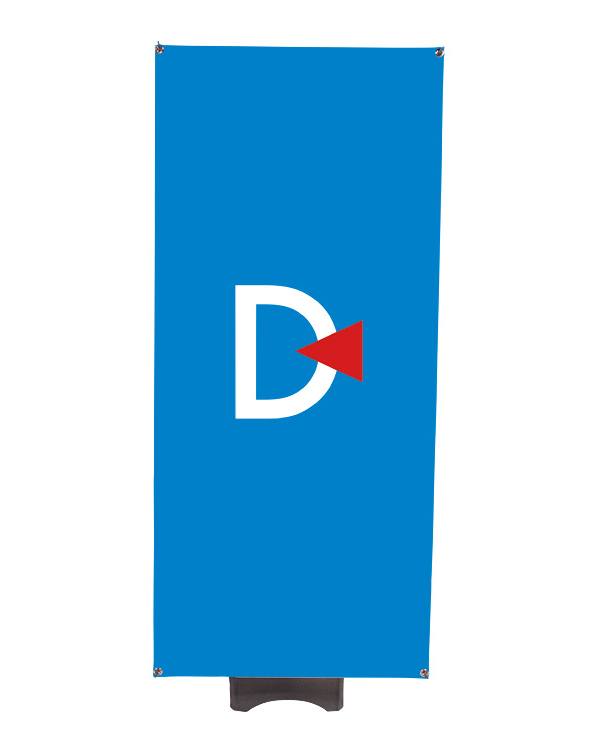
Outdoor kakemono stand
Roll-up banner basic
Roll-up banner premium
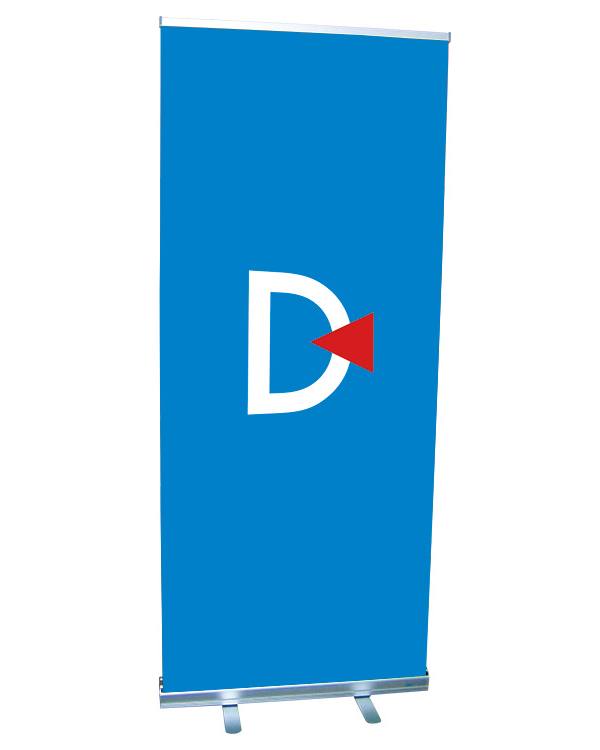
Roll-up Caméléon
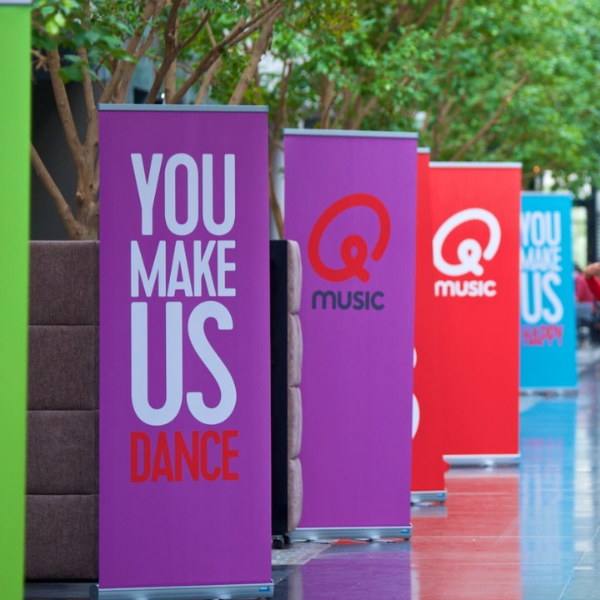
Roll-up banner basic
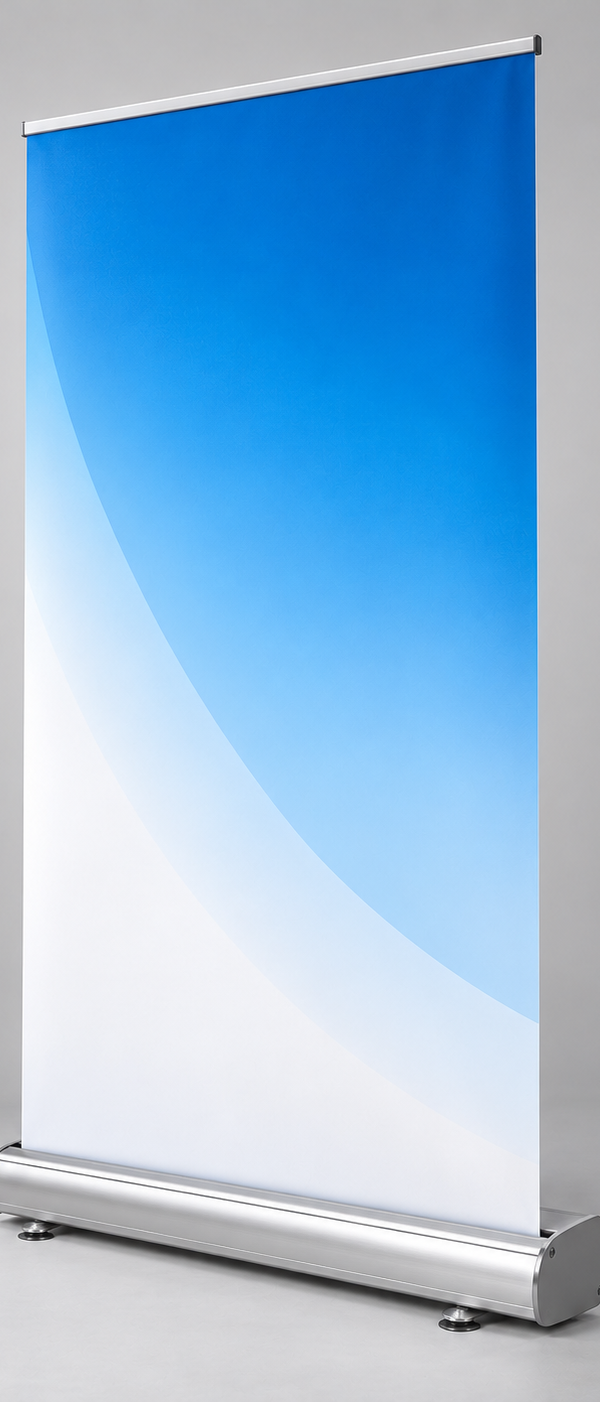
Roll-up banner premium
- Our approach
- 1Advice
- 23D design
- 3Production
- 4Installation
- 5Maintenance
What this gives you
From first sketch to maintenance — one partner who handles everything in-house.
One partner, from A to Z
You call one number. We measure, design, produce, install and maintain. No fragmented responsibility, no waiting on subcontractors pointing at each other.
You see it before it exists
A 3D visualisation of your own façade or space, by day and by night. We only start producing once that image is right. No surprises afterwards.
In-house production in Olen
Custom work from our own workshops, without intermediaries. That means a shorter lead time, a sharper price, and changes that are genuinely still possible.
Built to last
ISO 9001 and ISO 14001. Colourfast, weather-resistant materials and energy-efficient LED lighting. With long-term service and maintenance.
Roll-up banners: standing in seconds
A roll-up banner is a fabric that rolls into a cassette with a telescopic pole. Roll it out, hook it in, done. That convenience explains why the format has been the standard for years at reception desks, exhibitions, open days and internal communication: anyone can set one up, without tools and without instructions.
We design, print and supply roll-up banners for companies, local authorities, schools, care institutions and associations, from a single unit to a series for every site.
Where the quality differences lie
Roll-ups look alike, but the difference between a banner that still stands taut after three exhibitions and one that hangs crooked after two is considerable.
- The cassette. A heavier cassette with a wide base stands stable and pulls the fabric straight. A light cassette tips and lets the fabric ripple.
- The roll-up mechanism. A spring system that rolls up in a controlled way lasts for years; a cheap mechanism lets the fabric run in crooked over time.
- The fabric. A thicker, lightly coated material with a grey backing blocks show-through. Without that blocking layer, backlighting will show the reverse of your own design.
- The finish of the top rail. A clamped rail can be replaced; a glued one cannot.
As standard we work with a blocking fabric and a cassette matched to how often it is used. For a banner that stands out once a year at an open day, that need not be the heaviest version, and we will say so.
Sizes and variants
The usual size is roughly eighty to a hundred centimetres wide and two metres high: tall enough to read over people's heads, narrow enough to fit in a car. There are also wider versions that serve as a back wall, double-sided cassettes for places where people pass on both sides, and versions with an interchangeable fabric.
That last one is worth considering as soon as you change something more than once a year: you replace only the fabric and keep the cassette. That reduces the recurring cost and cuts down on waste.
Design that works on an exhibition floor
Most roll-ups fail visually rather than technically. A few rules that hold up in practice.
- Put the core message in the top half. The bottom thirty centimetres stands behind visitors, bags and tables.
- One message per banner. Put three services on one fabric and you communicate none.
- Large type and plenty of white space. Reading distance on an exhibition floor is three to five metres, not thirty centimetres.
- Contrast over colour. A subtle gradient with thin light lettering disappears under exhibition lighting.
- Contact details or a QR code at the bottom, but not as the main message.
We create the design or work up your existing house style, and we show a proof before anything is produced.
Transport and use
Every banner comes with a carrying bag. Store it upright and rolled up, not flat under other material: a crease in the fabric never comes out again. Roll the banner in fully after use; a half-rolled fabric distorts.
For anyone regularly on the road, a sturdier transport case with a shoulder strap pays off. A small detail, but it decides whether the banner still looks presentable after two years.
What determines the price?
Roll-up banners have no fixed unit price. The cost follows from the size, the quality of the cassette and the mechanism, the fabric material and whether it is a blocking type, single or double sided, the number of units - over a series the cost per unit drops sharply, because the printing is set up in one run -, whether we create the design or you supply the file, and whether you opt for a version with an interchangeable fabric.
Give us the quantity, the size and how often it will be used, and you will get a quotation per version, so you can weigh up a light cassette against a heavy one yourself.
Requesting a proposal
Send us your logo, house style and the message the banner has to carry. We will produce a design proposal and a proof before you decide.
Projects
All projects

Frequently asked questions
Kan ik enkel de print vervangen bij een nieuwe actie?
Wat is het verschil tussen een totem en een reclamezuil?
Wat is een photocall?
Kunnen onze winkels zelf bijbestellen?
Didn't find what you were looking for?
What you see here is a selection. Our range is considerably wider — in sizes, materials and finishes that we cannot all show online. Tell us what you need it for and where it has to go, and we will work out what fits.
Ask your questionAccess to prices and ordering
Request access to our Herva-Doublet Platform. We review your request personally.