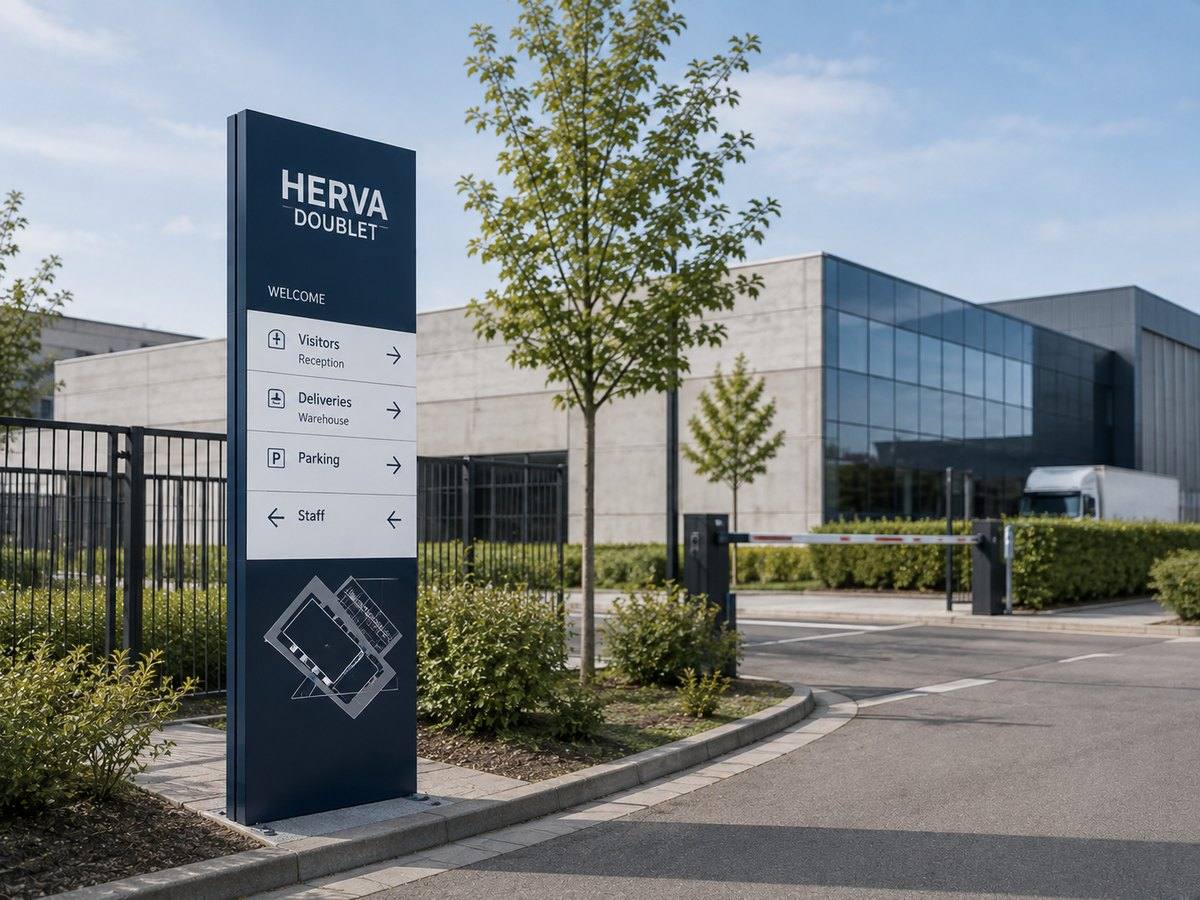
Wayfinding totem / information pillar
Free-standing totems and information pillars that orient visitors right at the entrance to a site. The starting point of a well-considered wayfinding plan.
Alle wayfinding totem / information pillar
Prijzen zijn beschikbaar in het Herva-Doublet Platform.
- Our approach
- 1Advice
- 23D design
- 3Production
- 4Installation
- 5Maintenance
What this gives you
From first sketch to maintenance — one partner who handles everything in-house.
One partner, from A to Z
You call one number. We measure, design, produce, install and maintain. No fragmented responsibility, no waiting on subcontractors pointing at each other.
You see it before it exists
A 3D visualisation of your own façade or space, by day and by night. We only start producing once that image is right. No surprises afterwards.
In-house production in Olen
Custom work from our own workshops, without intermediaries. That means a shorter lead time, a sharper price, and changes that are genuinely still possible.
Built to last
ISO 9001 and ISO 14001. Colourfast, weather-resistant materials and energy-efficient LED lighting. With long-term service and maintenance.
Wayfinding totems and information pillars at the entrance to your site
A wayfinding totem is the first thing a visitor sees when driving onto your site, and it is the moment at which they decide whether to go left or right. A good totem answers three questions at a glance: am I in the right place, where do I have to be, and where do I park. The signs and arrows that follow build on that. Without that starting point, signage stays a collection of loose signs.
We design, produce and install totems and information pillars for business parks, care campuses, schools, sports sites, local authorities and retail zones. Just as important as the pillar itself is the thinking behind it: which destinations get a place, in what order, and in which words. We do that with you, because a handsome totem with the wrong content solves nothing.
Where you use them
- At the main entrance to a site, as a landmark and orientation point
- At the entrance to a car park, showing the layout in zones
- On a campus with several buildings, as an intermediate step along the route
Versions
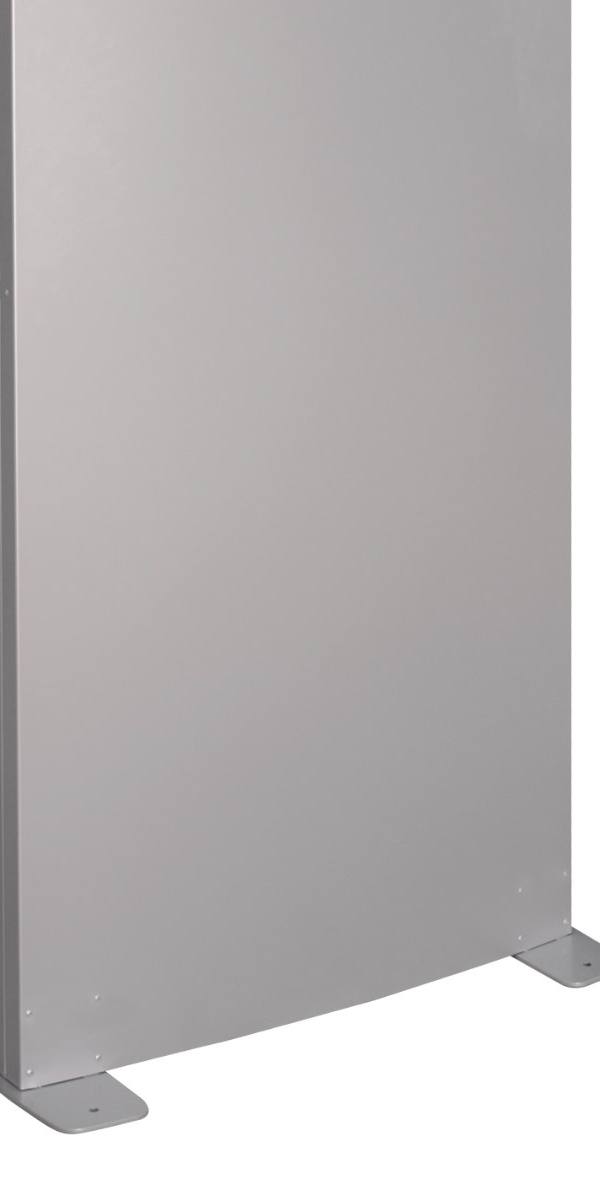
Single-sided and double-sided
Single-sided is enough when visitors always approach the pillar from the same side. Choose double-sided at a combined entrance and exit, or where the pillar stands in a through route. Think that through in advance, because converting afterwards costs more than getting it right at the outset.
Information pillars with interchangeable panels
For sites where companies, departments or tenants change. The pillar stays put, the nameplates slide out and are replaced. Over the long term the only affordable version where occupancy changes.
Illuminated totems
Internally illuminated or floodlit, so that the pillar still works in the evening. For sites with shift work or evening activity that is not a luxury. Allow for a power supply and switching, and include it in the groundworks.
Material and construction
The supporting structure is usually an aluminium profile frame or a welded steel construction, finished with aluminium or composite panelling and powder-coated in your house style colours. The graphics are applied as UV-resistant print, vinyl or routed lettering; built-up lettering gives depth and lasts longest. The pillar is anchored on a concrete base or with a ground anchor, on a foundation calculated for the wind load of the format.
In practice
- Limit the number of lines: a totem with more than six or seven destinations is not read by somebody who is driving
- Use the words visitors use themselves, not your internal names or department codes
- Choose the letter height on the basis of reading distance and speed, with strong contrast between lettering and background
- Place the pillar before the decision point, not on it; anybody who has passed it can no longer choose
- For installation on the public domain, follow what the permit and the tender specification impose
When a totem is not the right answer
If visitors get lost because the route is complicated, a bigger pillar will not solve it. What you need then is a wayfinding plan with smaller indications at every decision point. And on a site with one building and one entrance, a good facade sign is usually enough. We would rather tell you that than sell you a pillar that adds nothing.
What determines the price?
The price depends on the dimensions and the height, the method of construction, the material and the coating finish, single-sided or double-sided execution, the number of interchangeable panels, the way the graphics are applied and whether illumination is included. Design work and drawing up the wayfinding plan also weigh in, as do the foundation, groundworks, an electrical connection and installation on site.
Discuss your wayfinding with us
Send us a plan of the site, the destinations that have to be indicated and a few photos of the entrance. We will propose a totem and an approach, and provide a quotation to suit.
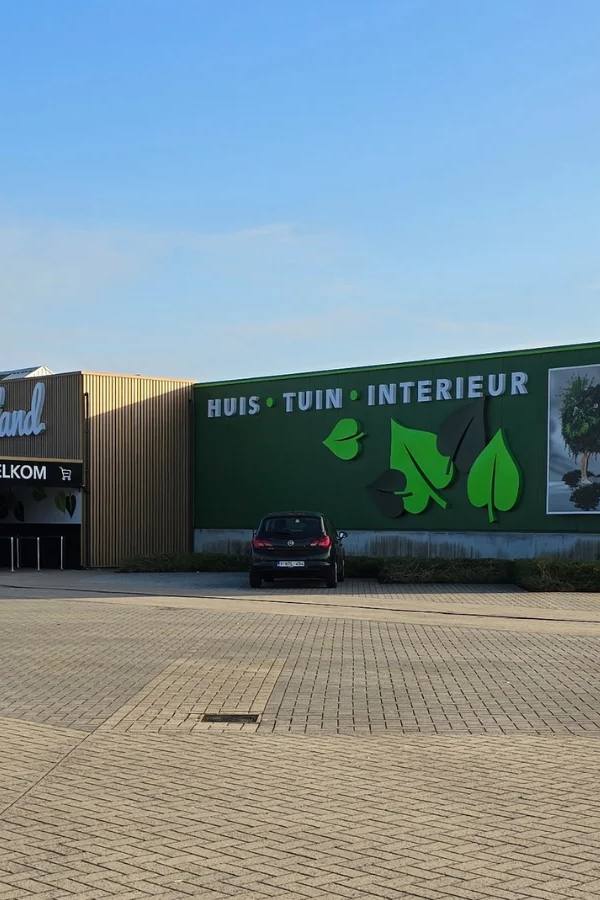
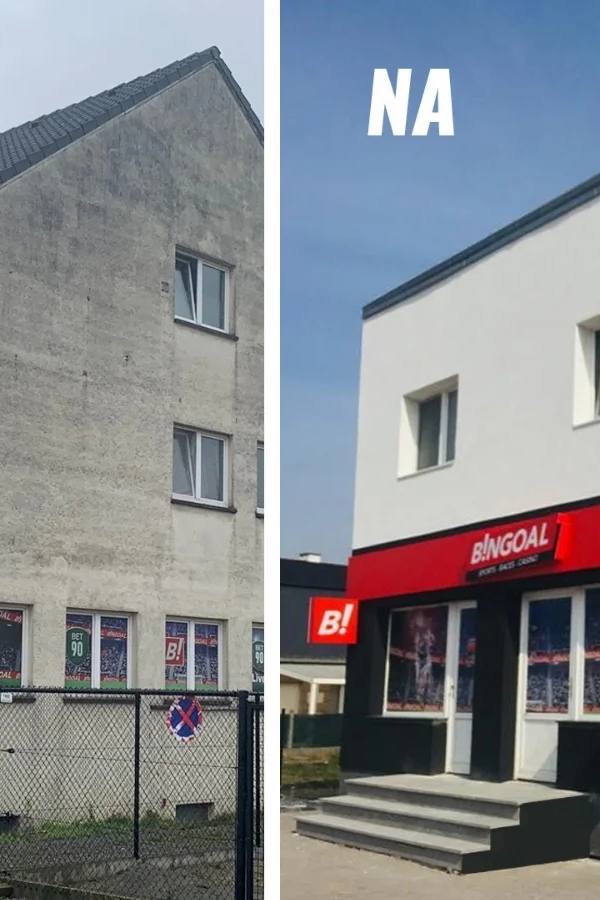
Projects
All projects
Frequently asked questions
Voldoen jullie verkeersborden aan de Belgische normen?
Wanneer zijn podotactiele noppentegels verplicht?
Wat is het verschil tussen wayfinding en signalisatie?
Beschermen jullie ook muren tegen heftrucks?
Didn't find what you were looking for?
What you see here is a selection. Our range is considerably wider — in sizes, materials and finishes that we cannot all show online. Tell us what you need it for and where it has to go, and we will work out what fits.
Ask your questionAccess to prices and ordering
Request access to our Herva-Doublet Platform. We review your request personally.