Bicycle shelters and canopies
Covered bicycle shelters that protect bikes from wind and weather. Can be combined with single or two-tier racks and side panels.
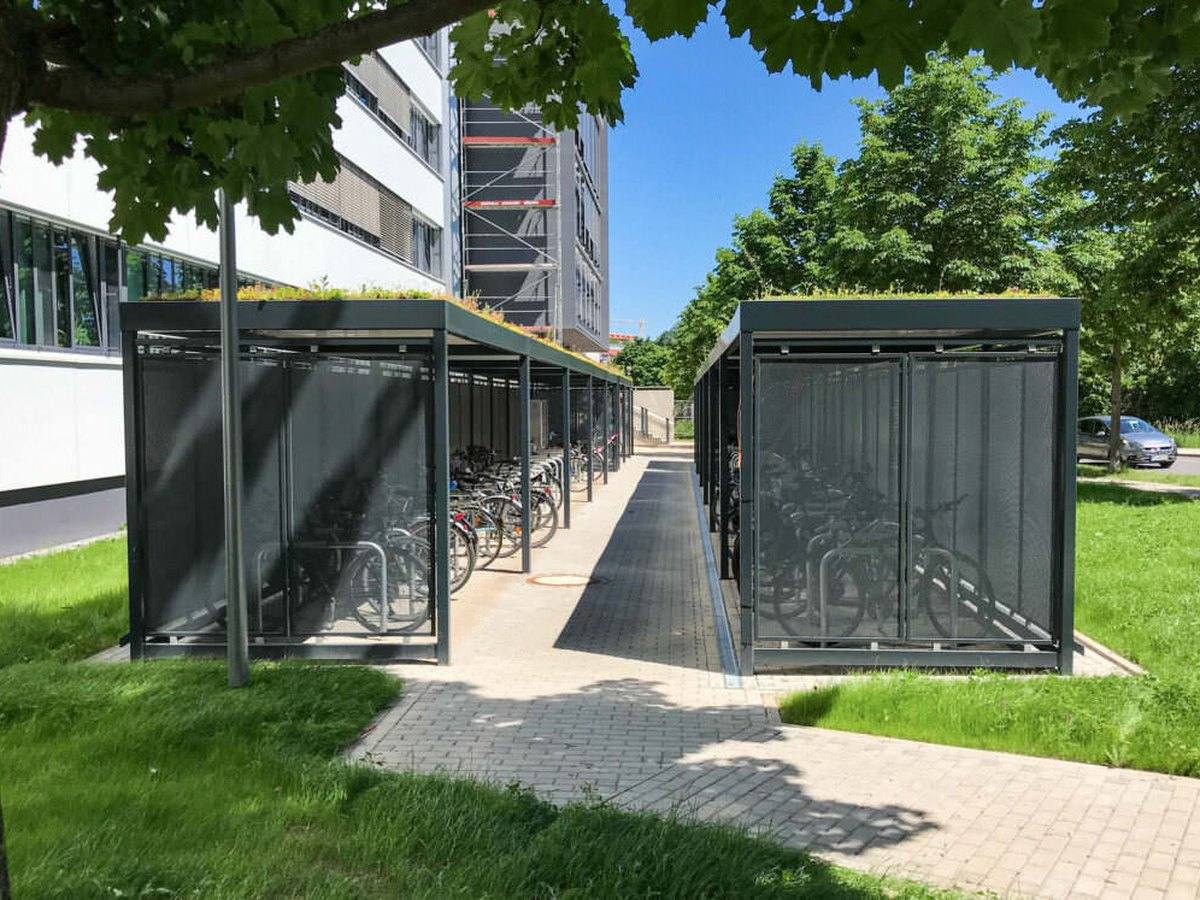
HD-Modulo — designed and produced in-house
We configure your bicycle shelter to measure
HD-Modulo is a modular covered bicycle shelter, designed and produced in-house. The steel supporting structure is built on a fixed 2.870 mm grid, so any size comes together seamlessly and later extension always remains possible. You choose the dimensions, the cladding and the equipment — we design, produce and install.
Configure your shelter in four steps
Indicate what you need. We will draw up your shelter and send you a tailored proposal.
1. How many bicycle spaces?
Clear height 2,500 mm, total height 2,820 mm, foundation 800 mm deep, steel grade S235JR. Other dimensions are possible — the grid allows any combination.
2. Cladding
Other RAL colours and materials are always open for discussion.
3. Equipment
4. Your details
Why HD-Modulo
- 1
Fully modular and scalable
Modules are combined according to the available space. Later extension remains possible thanks to the fixed 2.870 mm grid.
- 2
Fast prefab installation
All parts are prepared in our workshop and delivered ready to fit. Minimal site disruption, short installation time.
- 3
Architectural customisation
Free choice of RAL colour, cladding and accessories, so every shelter fits your building or campus.
- 4
Herva-Doublet’s own design
You work directly with the manufacturer, without intermediaries and with shorter lines.
Applications
- businesses and SMEs
- schools and campuses
- hospitals and care
- retail parks
- stations and mobility hubs
- government and public space
Ready to configure your shelter?
Send us the number of bicycle spaces you need, the available space and your cladding preference. We will come back with a tailored proposal.
Alle bicycle shelters and canopies
Prijzen zijn beschikbaar in het Herva-Doublet Platform.

Fietsen- & motoroverkapping Voûte L

Fietsen- & motoroverkapping Voûte XXL

Fietsoverkapping Conviviale®

Fietsoverkapping Demi-Lune

Fietsoverkapping Éco

Fietsoverkapping Milan
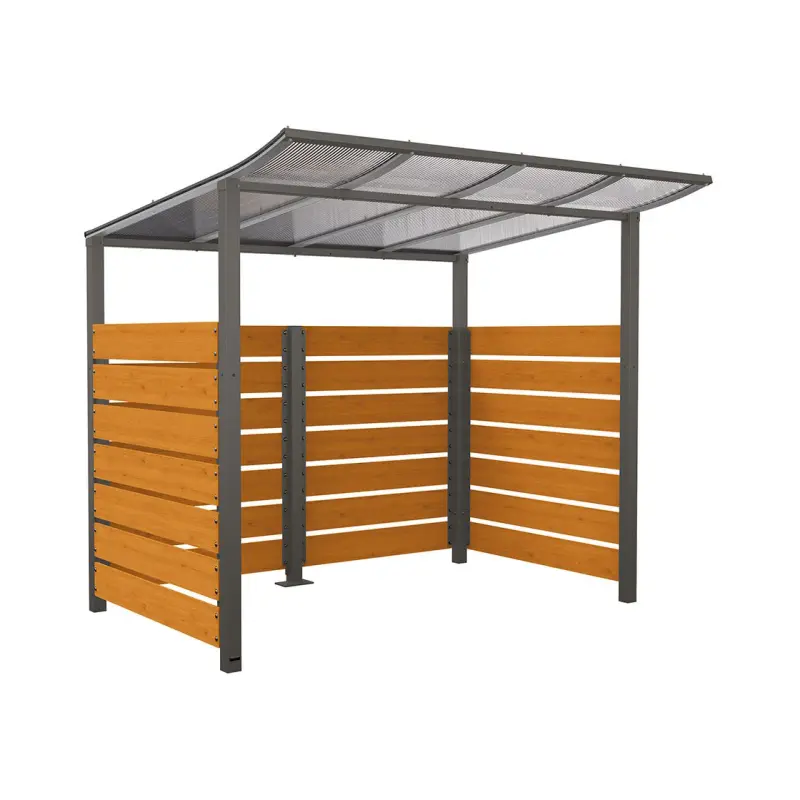
Fietsoverkapping Modulo met compactwanden

Fietsoverkapping Modulo met glaswanden

Fietsoverkapping Province

Fietsoverkapping Voûte M met glaswanden
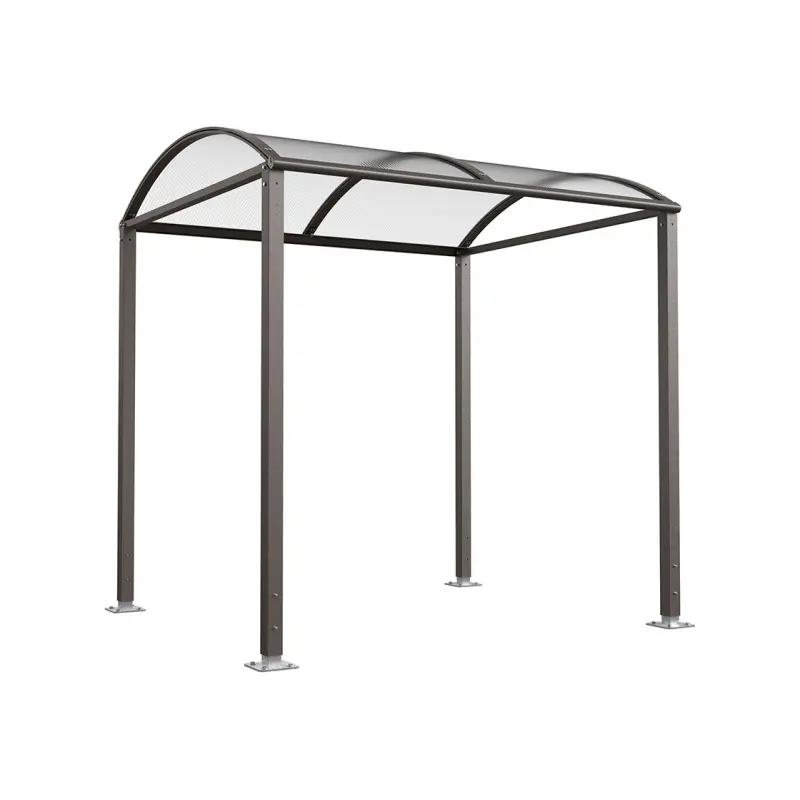
Fietsoverkapping Voûte M met polycarbonaatwanden
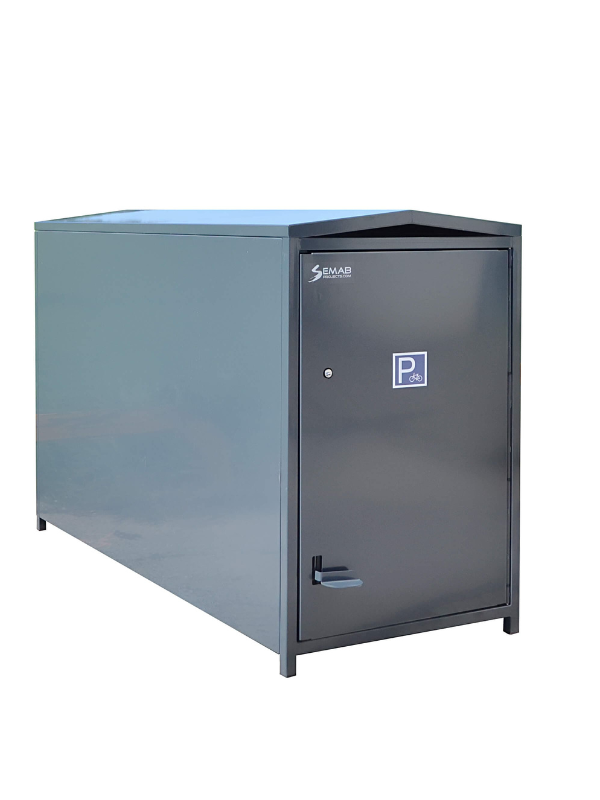
Individual bike locker
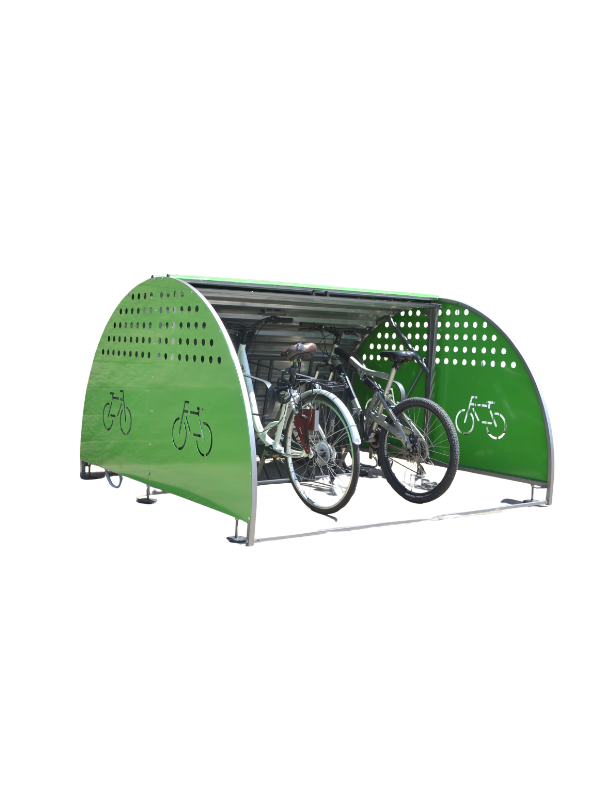
Modular bike shelter (5 spaces)
- Our approach
- 1Advice
- 23D design
- 3Production
- 4Installation
- 5Maintenance
What this gives you
From first sketch to maintenance — one partner who handles everything in-house.
One partner, from A to Z
You call one number. We measure, design, produce, install and maintain. No fragmented responsibility, no waiting on subcontractors pointing at each other.
You see it before it exists
A 3D visualisation of your own façade or space, by day and by night. We only start producing once that image is right. No surprises afterwards.
In-house production in Olen
Custom work from our own workshops, without intermediaries. That means a shorter lead time, a sharper price, and changes that are genuinely still possible.
Built to last
ISO 9001 and ISO 14001. Colourfast, weather-resistant materials and energy-efficient LED lighting. With long-term service and maintenance.
A covered bike shelter that works all year round
A cycle shelter only succeeds when cyclists use it of their own accord. That rarely comes down to the model alone: the location, the walking distance to the entrance, the width of the aisles and whether a cargo bike fits weigh at least as heavily. So we start from the use and not from the catalogue.
We design, supply and install covered bike shelters for local authorities, schools, stations, companies and residential projects, from a simple canopy over ten bikes to a complete shelter with hundreds of spaces.
Why a roof makes the difference
An unprotected bike is visibly worse off after a single winter. Saddles get wet, chains rust, the electronics on electric bikes take a beating. Where people leave their bike for a full working day or school day, a roof is not a luxury but the factor that decides whether they cycle in again tomorrow.
A canopy also does something that is often underestimated: it makes the shelter visible as a facility. A roof marks the spot, so bikes end up less scattered across railings and lamp posts.
How a shelter is built up
The canopy
A frame in hot-dip galvanised steel or aluminium, with roofing in steel sheet, polycarbonate, glass or a green roof. Polycarbonate lets light through, which makes the shelter brighter and socially safer during the day. A green roof is attractive in projects with de-paving and water targets, but calls for a heavier structure.
The racks
Single-tier or two-tier, with or without a leaning bar. Two-tier doubles the capacity per square metre but needs more height and a mechanism that stays workable with a heavy or electric bike. We prefer to let you try that out first.
Side panels
Fully closed, half open, in perforated sheet or in glass. Closed panels give better protection against driving rain; open panels keep the bikes in view and work better against vandalism.
Lighting and services
Lighting with motion detection, charging points for electric bikes, camera brackets or solar panels on the roof.
The position decides the success
A few rules that hold up in practice: the shelter lies closer to the entrance than the car park, it is visible from a route people actually use, it can be reached without dismounting too early, and it is lit.
At schools the peak counts: three hundred bikes arrive within ten minutes. There the width of the aisles and the number of entrances matter more than the rack type. At companies it is the parking duration and the share of electric bikes that count.
Material, foundations and maintenance
Hot-dip galvanised and powder-coated steel is the workable standard: strong, repairable and still worth refurbishing years later. Aluminium does not corrode and keeps the structure light. Hardwood adds warmth but needs maintenance.
The foundation follows from the wind load, the snow load and the soil type. On existing concrete, anchoring is often enough; on soft ground, pad foundations or a slab are needed. We calculate that and include it in the proposal.
Maintenance stays limited to checking the anchoring, repairing damaged coating and clearing the gutters. We supply spare parts afterwards.
Points that are often forgotten
- Space for cargo bikes, bike trailers and bikes with child seats.
- The extra width taken up by panniers; a centre-to-centre spacing that works on paper can make every second space unusable in practice.
- A socket or charging provision, even where there are still few electric bikes today.
- Roof drainage: where does the rainwater end up, and will the front row of bikes be standing there.
What determines the price of a bike shelter?
There is no fixed price per space. The cost follows from the number of spaces and the rack type, the span and the material of the canopy, the roofing, the number and type of side panels, the foundation that follows from the ground conditions and the wind load, extra services such as lighting, charging points or solar panels, and the site conditions during installation.
Send us your site plan and the number of spaces you want, and you will get a detailed quotation and our advice on what is realistic in the space available. Better eighty usable spaces than a hundred of which half stay empty.
Putting your location to us
Send us a site sketch or a few photographs, with the number of bikes and the type of users. We will draw up a proposal with a layout, a material choice and phasing.
Projects
All projects
Frequently asked questions
Hoeveel plaats heb ik nodig per fiets?
Fietsbeugel of fietsenrek — wat kies ik?
Zijn dubbellaagse rekken gebruiksvriendelijk?
Zijn er subsidies voor fietsenstallingen?
Didn't find what you were looking for?
What you see here is a selection. Our range is considerably wider — in sizes, materials and finishes that we cannot all show online. Tell us what you need it for and where it has to go, and we will work out what fits.
Ask your questionAccess to prices and ordering
Request access to our Herva-Doublet Platform. We review your request personally.