PVC foam board – direct print
Light, flat plastic panel (PVC foam) with direct print. For indoor signs, lettering and interior use. Outdoors only in sheltered spots and at small sizes: forex bows and fades.

Forex is a lightweight plastic sheet (PVC foam). It is cheaper and lighter than dibond, and easy to work. But it is also softer and less rigid: at larger sizes it bows, and it damages more easily. For indoor use and smaller signs it is excellent.
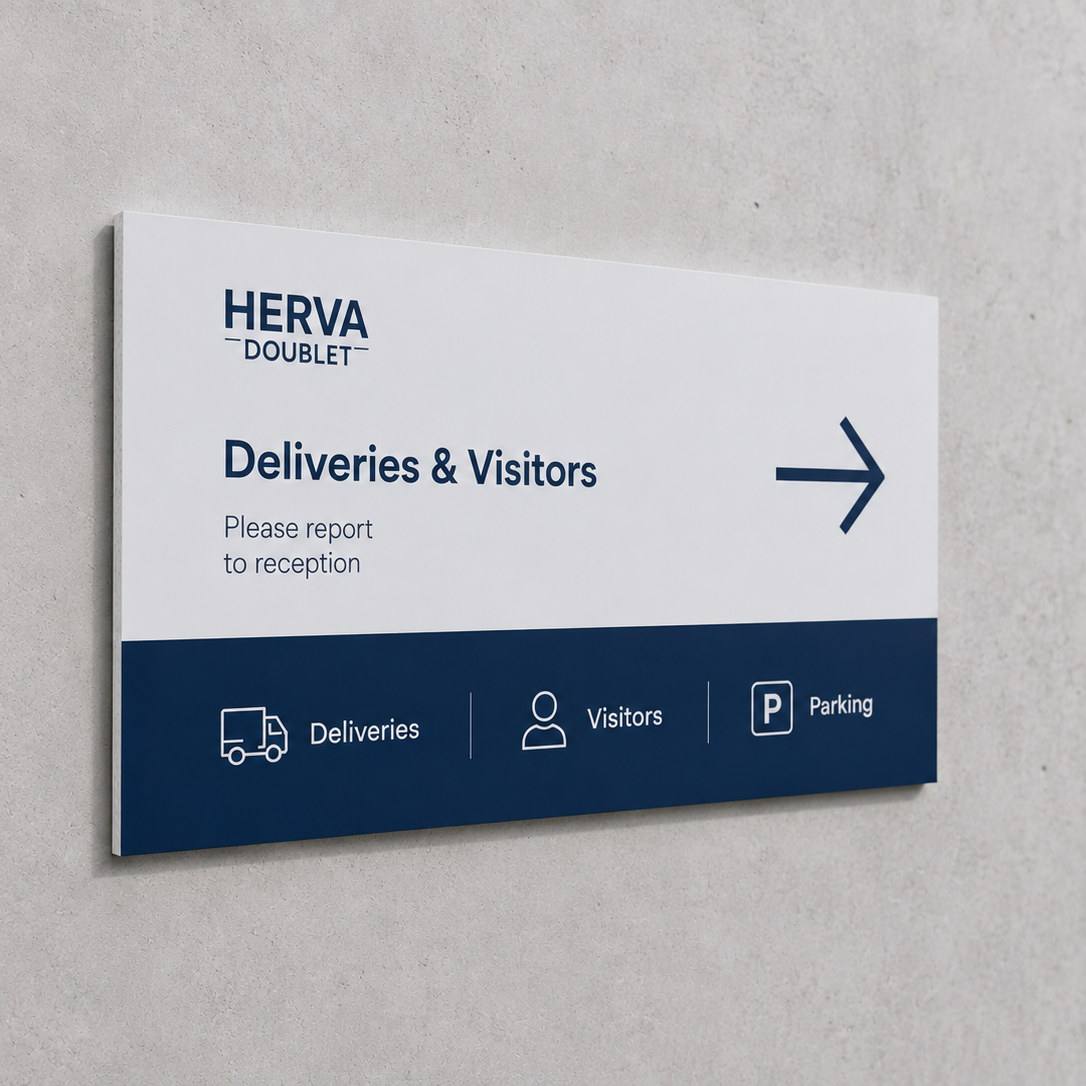
Light, flat plastic panel (PVC foam) with direct print. For indoor signs, lettering and interior use. Outdoors only in sheltered spots and at small sizes: forex bows and fades.
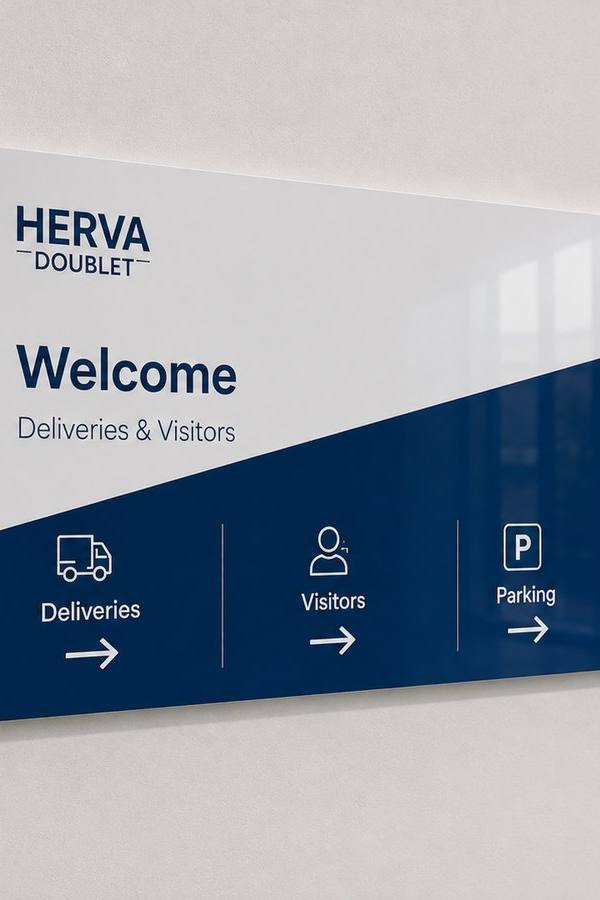
Printed film on the forex sheet, finished with a laminate. The protective layer matters more than on dibond, because forex is softer. It remains an indoor material; outdoors only sheltered and temporary.
From first sketch to maintenance — one partner who handles everything in-house.
You call one number. We measure, design, produce, install and maintain. No fragmented responsibility, no waiting on subcontractors pointing at each other.
A 3D visualisation of your own façade or space, by day and by night. We only start producing once that image is right. No surprises afterwards.
Custom work from our own workshops, without intermediaries. That means a shorter lead time, a sharper price, and changes that are genuinely still possible.
ISO 9001 and ISO 14001. Colourfast, weather-resistant materials and energy-efficient LED lighting. With long-term service and maintenance.
PVC foam board is an expanded plastic sheet with a closed cell structure and a smooth, matt surface. It is light, rigid, unaffected by moisture and easy to work. Many people know it by a brand name, the way some materials end up being called after a single manufacturer, but the material itself is generic.
Also in common use: PVC sheet, foam sheet, plastic panel.
This is the big difference with foam board. Where foam board has paper facings and has to stay indoors, PVC foam board is plastic throughout and therefore moisture resistant. A sign on a façade, a nameplate on a gate, a panel in a damp room: all fine.
For permanent outdoor use at larger sizes, dibond remains the stiffer choice, because PVC foam board can bow in heat and over long spans. For sizes up to a metre or a metre and a half, and for applications that need to last a few years, foam board is the logical and more economical option.
The thickness determines the rigidity and with it the application. Thin sheets suit panels that are fully bonded or supported. As a panel gets larger, or hangs from a few fixing points, you go thicker. For free-standing signs and anything hung from two fixing points, a solid thickness is the difference between a flat sign and one that develops a belly after a summer.
PVC foam board can be sawn, routed, drilled and contour cut. That makes it suitable for cut-out letters, logo shapes and panels with apertures. It can be mounted with screws and standoffs, with double-sided tape, with adhesive or in a profile.
One point to watch: plastic expands in heat. On large panels on a south-facing façade, allow for that by drilling the fixing holes slightly oversize, so the sheet can move without bowing.
We print directly onto the sheet. The matt surface gives a calm image without glare, which suits text panels and signage read at close range. Where extra protection against scratching or graffiti is needed, a laminate can be applied over the print.
Size and sheet thickness set the baseline. Cutting weighs heavily: rectangular and contour cutting are different processes. Beyond that, single or double sided printing, any laminate, the mounting method and the quantity make the difference. Order ten identical panels and you pay for the set-up once.
We print, cut, drill and finish with the fixings that suit your substrate. Tell us whether the panel goes indoors or outdoors, how large it will be and how it will be fixed, and we will advise on the thickness and the finish.
What you see here is a selection. Our range is considerably wider — in sizes, materials and finishes that we cannot all show online. Tell us what you need it for and where it has to go, and we will work out what fits.
Ask your questionWe think along from the first sketch through to installation and maintenance.