
Bike service and repair points
Repair points with a pump and tools that complete a cycle route or a site. A small gesture with a lot of user convenience.

Alle bike service and repair points
Prijzen zijn beschikbaar in het Herva-Doublet Platform.
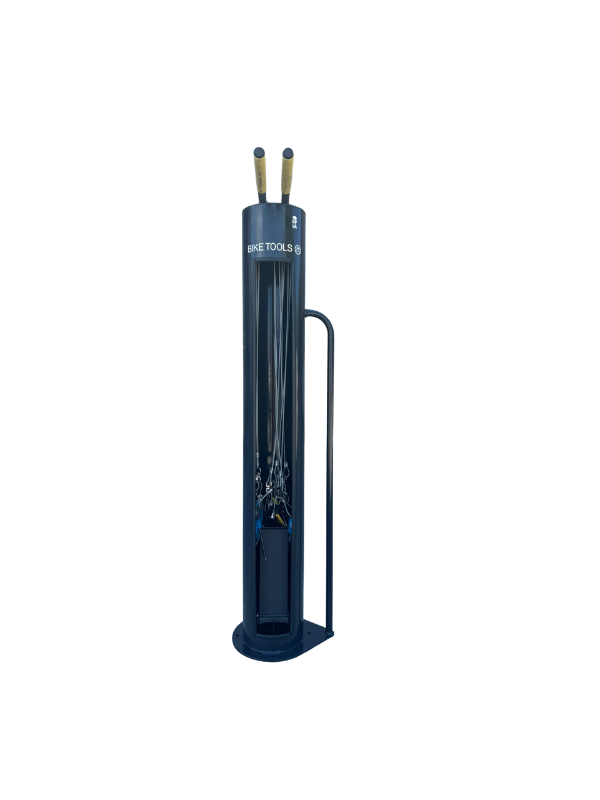
Bike repair station

Fietsherstelpunt & pomp Amsterdam

Bike cleaning station

Floor-standing bike pump, foot-operated
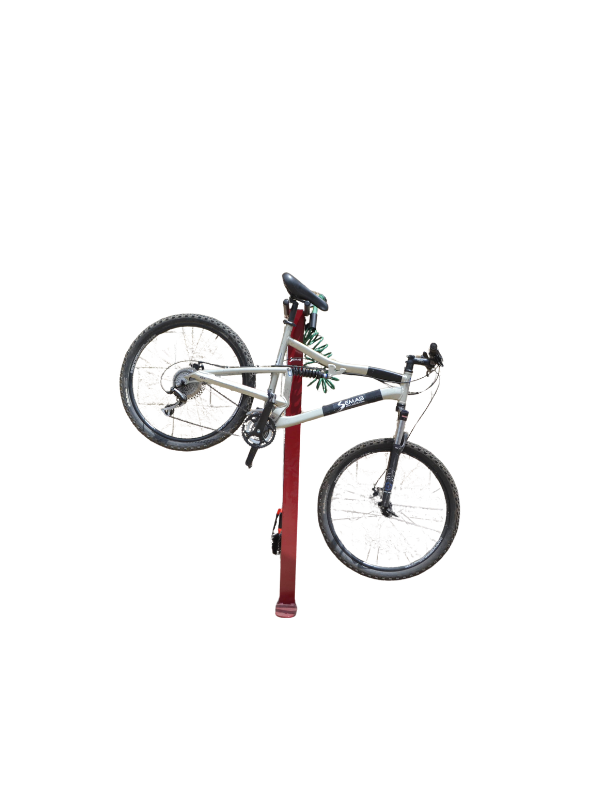
Bike wash station
- Our approach
- 1Advice
- 23D design
- 3Production
- 4Installation
- 5Maintenance
What this gives you
From first sketch to maintenance — one partner who handles everything in-house.
One partner, from A to Z
You call one number. We measure, design, produce, install and maintain. No fragmented responsibility, no waiting on subcontractors pointing at each other.
You see it before it exists
A 3D visualisation of your own façade or space, by day and by night. We only start producing once that image is right. No surprises afterwards.
In-house production in Olen
Custom work from our own workshops, without intermediaries. That means a shorter lead time, a sharper price, and changes that are genuinely still possible.
Built to last
ISO 9001 and ISO 14001. Colourfast, weather-resistant materials and energy-efficient LED lighting. With long-term service and maintenance.
Bike service and repair points along routes and on sites
A bike service point or repair point is a fixed station with an air pump and tools for making a small adjustment on the way: inflating a tyre, straightening a saddle, adjusting a brake pad. It is deliberately simple: not a workshop, but the minimum needed to get someone with a breakdown back on the road.
They are intended for municipalities and provinces fitting out a cycle route, for companies and care institutions encouraging cycling to work, for schools and campuses, and for tourist estates. We usually install them together with bike shelters, so that the cycling facilities on a site form one whole.
Where a repair point does its job
- At junctions and rest points on recreational cycle networks, where people stop anyway.
- Along cycle highways and commuter routes, preferably with lighting.
- At the bike parking of an office building, hospital, school or sports complex.
- At station areas, mobility hubs and Park and Ride car parks.
- In parks and provincial estates, as a welcome point for cycle tourists.
Versions and equipment
The basic version combines a floor pump with tools on steel cables. The pump head usually fits both car and bicycle valves, with a pressure gauge so the user can read off the pressure. The tools typically consist of Allen keys, screwdrivers and tyre levers. The cables are short: long enough to work with, too short to carry away.
As an option we provide a hanging bracket that holds the bike by the saddle or frame, so the wheels turn freely. That pays off where you expect chain and derailleur adjustments. A drinking water point or charging point is also possible. The panel lends itself to your house style or to the wayfinding of the network, preferably with a short instruction in pictograms.
Material and construction
Repair points stand outdoors, year in year out, and are used by everyone. The construction is therefore robust: steel, hot-dip galvanised and powder coated, or aluminium where weight and corrosion matter. Anchoring is done with a base plate on a concrete foundation or with a buried foot. On a paved car park the existing foundation is usually enough; on a verge or a semi-paved route a separate foundation is needed. Deliberately choose security fixings; at remote locations that is no luxury.
Practice, maintenance and points of attention
The biggest risk is not vandalism but neglect. A pump with a split hose, or a station where the tools have been missing for months, does more harm than no station at all. So set out from the start who checks it and how often, and make sure spare parts stay readily available. A QR code or a reporting number lets users report a fault themselves.
Common mistakes: a point in a place nobody passes because there happened to be room there, a station without lighting that is unusable after dark, or a set-up so close to the shelter that whoever is repairing a bike blocks the passage. Reckon on at least a metre of free space all round and a level, paved standing area.
Always the right choice? No. On a small site with ten bikes and an in-house technical department, an ordinary pump in the store room makes more sense. A repair point comes into its own in public places and on routes where people pass by.
What determines the price?
The determining factors are the configuration (pump only, pump with tools, with or without a hanging bracket), the material and surface treatment, the RAL colour, the number of units, the personalisation of the panel, the anchoring and the substrate, any foundation works, and whether we install it. A drinking water or charging point also weighs in. We always start from your situation or from what the tender specification prescribes.
Determining the right set-up together
Tell us where the point will go, who will use it and what is already there. We will think along with you about location, equipment and anchoring, and send you a tailored quotation. Feel free to get in touch.
Projects
All projects
Frequently asked questions
Hoeveel plaats heb ik nodig per fiets?
Fietsbeugel of fietsenrek — wat kies ik?
Zijn dubbellaagse rekken gebruiksvriendelijk?
Zijn er subsidies voor fietsenstallingen?
Didn't find what you were looking for?
What you see here is a selection. Our range is considerably wider — in sizes, materials and finishes that we cannot all show online. Tell us what you need it for and where it has to go, and we will work out what fits.
Ask your questionAccess to prices and ordering
Request access to our Herva-Doublet Platform. We review your request personally.