Special materials (light-transmitting concrete)
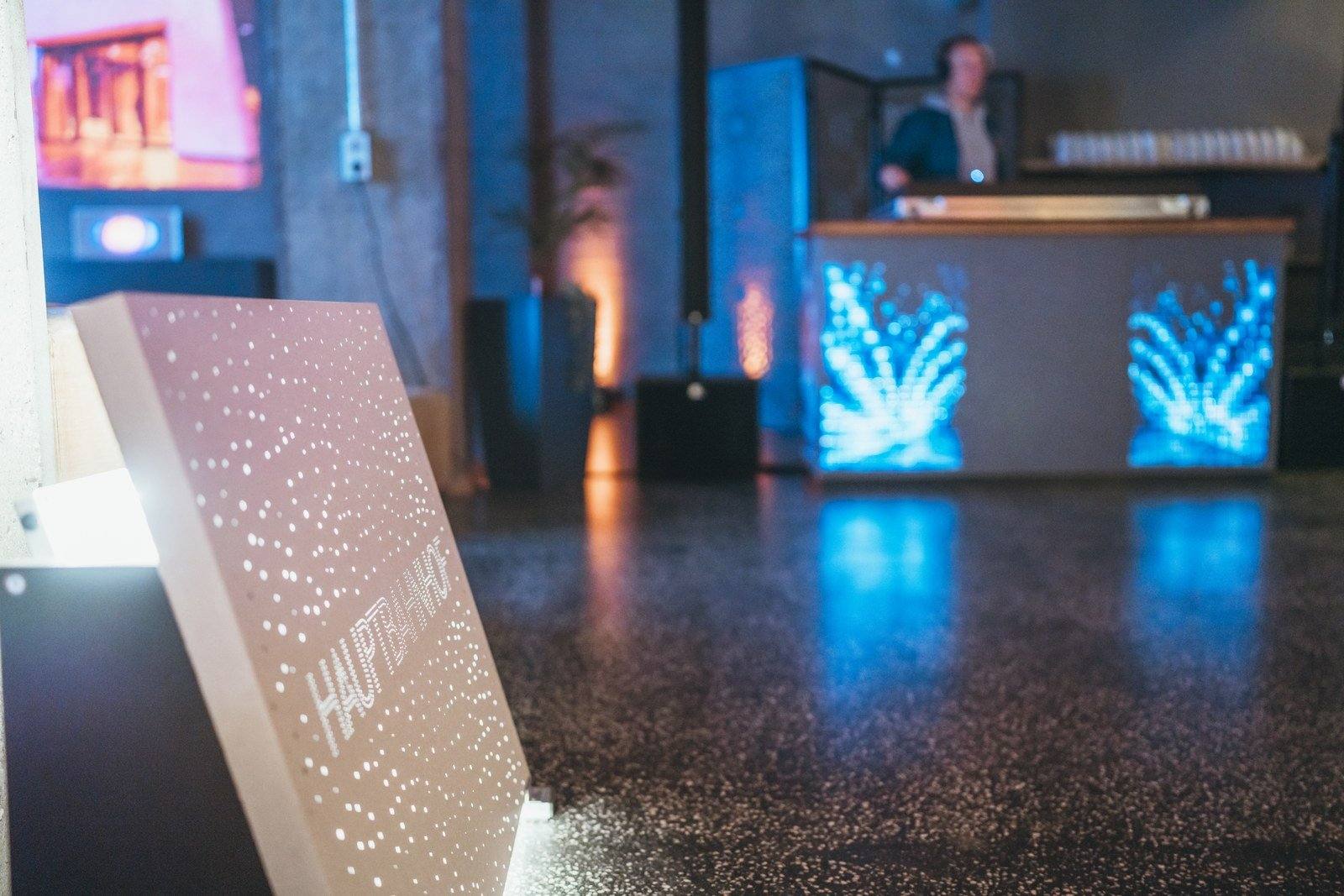
Solid concrete with thousands of optical fibres cast into it. By day you see concrete; as soon as there is light behind it, the wall lets shapes and shadows through.
Our approach
- 1Advice
We listen, measure up and think along.
- 23D design
Realistic visualisations for approval.
- 3Production
Custom work in our own workshops.
- 4Installation
Expert installation on site.
- 5Maintenance
Long-term service and maintenance.
What this gives you
From first sketch to maintenance — one partner who handles everything in-house.
One partner, from A to Z
You call one number. We measure, design, produce, install and maintain. No fragmented responsibility, no waiting on subcontractors pointing at each other.
You see it before it exists
A 3D visualisation of your own façade or space, by day and by night. We only start producing once that image is right. No surprises afterwards.
In-house production in Olen
Custom work from our own workshops, without intermediaries. That means a shorter lead time, a sharper price, and changes that are genuinely still possible.
Built to last
ISO 9001 and ISO 14001. Colourfast, weather-resistant materials and energy-efficient LED lighting. With long-term service and maintenance.
Light-transmitting concrete as a special material
Light-transmitting concrete is solid concrete with thousands of optical fibres cast into it. By day you see and feel ordinary concrete: cool, mineral, solid. Put light behind it or inside it and the wall suddenly lets shapes, silhouettes and logos through, as if the mass had become translucent. The effect keeps surprising people because it contradicts what concrete is expected to do.
We use this material where a space needs one strong element: a reception desk, a brand wall in a showroom, a facade accent at the entrance or an illuminated logo that sits inside the wall rather than on it. The enquiries come from architects, interior fit-out specialists, clients and companies looking for something that is not in every catalogue.
Where it works
- Reception and welcome walls where visitors form their first impression.
- Facade accents and name signs that only reveal themselves at dusk.
Versions
Made-to-measure panels
Slabs in a fixed thickness, cut to size and bonded or mechanically fixed to a supporting structure. The most widely used solution for walls and desks.
Cut-out or routed shapes
Letters, logos or graphic motifs worked out of the panel, so that light only comes through within that shape.
Surface finish
Ground and polished for a crisp, almost stone-like look, or rougher for a tactile result. The finish has a strong influence on how the light is distributed.
Material and technique
The optical fibres run from one face to the other through the concrete mass. They conduct light without transferring heat, so a light source behind the panel reproduces the image on the front almost one to one: a silhouette stays a silhouette. The thinner the element and the higher the fibre density, the brighter the result.
The light source is almost always LED, built into a light box or a rear structure a few centimetres away from the panel. That gap is essential: stick the LEDs against the concrete and you see dots instead of an even image. We draw that build-up out with you, together with the cable route and the position of the driver, because that has to stay accessible later.
Concrete is a mineral mass and behaves accordingly in terms of reaction to fire, but which class is formally required depends on the application and on what the specification prescribes. Check that before you choose, certainly in public buildings.
In practice
- Expect considerable weight. The supporting structure and the fixings have to be calculated in advance, not resolved afterwards.
- Cutting and cut-outs are best done in the workshop. Adjusting on site is laborious and risky.
- Maintenance is straightforward: keep it dust-free and clean with a non-aggressive product. Strongly acidic or abrasive products attack the finish.
- Common mistake: putting a logo that is too busy or too fine behind the panel. The effect lives on simple, recognisable shapes with enough contrast.
For large surfaces, tight budgets or temporary set-ups this material is not the logical choice. An illuminated textile frame or a printed wall covering will then give you a comparable experience with far less weight and construction work. Light-transmitting concrete earns its place as an accent, not as infill.
What determines the price?
- The total surface area and the thickness of the elements.
- The fibre density, which determines how bright and detailed the image comes through.
- Cut-outs, made-to-measure cutting and routed shapes.
- The lighting installation: type of LED, control, dimming and the rear structure.
- The supporting structure, the fixing method and how accessible the installation location is.
Interested in exploring the possibilities?
Send us the location, the dimensions you want and an idea of the image or logo you would like to shine through. We draw out the build-up, indicate what is technically feasible and provide you with a tailored quotation.
Projects
All projects
Frequently asked questions
Hoeveel akoestische panelen heb ik nodig?
Hout of PET — wat kies ik?
Kunnen de panelen bedrukt worden met ons logo?
Kunnen jullie buiten de kantooruren werken?
Didn't find what you were looking for?
What you see here is a selection. Our range is considerably wider — in sizes, materials and finishes that we cannot all show online. Tell us what you need it for and where it has to go, and we will work out what fits.
Ask your questionReady to start your special materials (light-transmitting concrete) project?
We think along from the first sketch through to installation and maintenance.