
Signboards
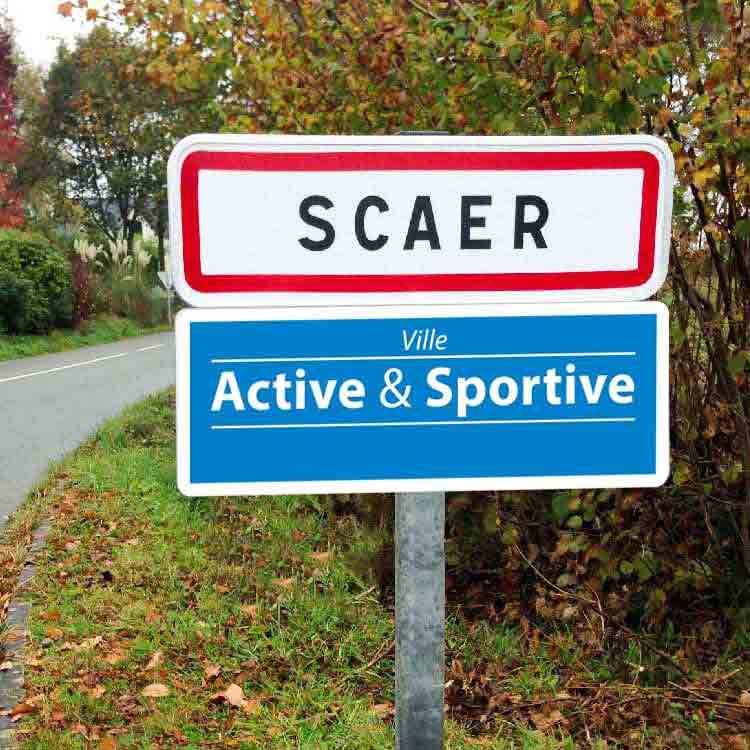
Signboards for sites, car parks and business parks, in dibond, aluminium or plastic. Clear, weather-resistant and printed to measure.
Alle signboards
Prijzen zijn beschikbaar in het Herva-Doublet Platform.
- Our approach
- 1Advice
- 23D design
- 3Production
- 4Installation
- 5Maintenance
What this gives you
From first sketch to maintenance — one partner who handles everything in-house.
One partner, from A to Z
You call one number. We measure, design, produce, install and maintain. No fragmented responsibility, no waiting on subcontractors pointing at each other.
You see it before it exists
A 3D visualisation of your own façade or space, by day and by night. We only start producing once that image is right. No surprises afterwards.
In-house production in Olen
Custom work from our own workshops, without intermediaries. That means a shorter lead time, a sharper price, and changes that are genuinely still possible.
Built to last
ISO 9001 and ISO 14001. Colourfast, weather-resistant materials and energy-efficient LED lighting. With long-term service and maintenance.
Signboards for sites, car parks and business parks
A signboard tells visitors and users what applies and where they have to go. On a business park, a car park, a school environment or a care campus, the board does the work that otherwise lands with reception or with a colleague: showing the way, setting out the rules, and directing traffic.
We design, produce and install signboards for companies, local authorities, schools, hospitals, contractors and the managers of sites and car parks.
Which board for which question
- Entrance and welcome boards at the entrance to a site: who is based here, where is reception, where do deliveries go, what applies on the site.
- Directional signs at the junctions on the site: buildings, departments, car parks, loading docks.
- Parking signs: reserved spaces, visitor parking, charging bays for electric vehicles, spaces for people with a disability.
- Regulation boards: what is permitted and what is not, and on what conditions people enter the site. This is the board that makes your site rules enforceable.
- Warning and safety signs: these follow separate standards, see our page on safety signage.
For traffic control on and around the site, standardised road signs apply; for those we refer you to our road signs page.
Materials and where they belong
- Dibond, an aluminium composite: flat, light, strong and the most used choice for outdoor signage. It stays straight and is economical in larger formats.
- Solid aluminium, anodised or powder coated: heavier and more expensive, but with the longest service life and the best resistance to deformation and vandalism.
- Plastics such as PVC or foam board: economical, light, and intended for indoor use or temporary outdoor use. It deforms over time in full sun.
- Galvanised steel: for heavy, standardised applications.
The finish determines how long the appearance lasts. A digital print with a UV protective laminate stays colourfast for years; a print without a laminate fades visibly on a south facing wall. We state the expected service life in the proposal instead of leaving it at "weather resistant".
Rigid signage panels
Rigid signage panels is the trade term for these stiff, flat boards: unlike a banner or a sticker they hold their shape, they do not flap, and they stay crisp for years. On car parks, business parks, construction sites and school grounds they are the backbone of any signage scheme.
What makes the difference in use lies in the finishing. Rounded corners prevent injuries in places where people pass. Holes are drilled in advance to suit the fixing, not improvised on site. In large formats a reinforcing profile or a folded edge is used to keep the panel rigid. And in sensitive locations an anti-graffiti laminate pays off, allowing paint to be removed without taking the print with it. Where boards also have to be read after dark, reflective film is available.
When a rigid panel is not the right choice
For a message that changes every few weeks, a permanently printed board is a waste. Choose a system with interchangeable insert sheets or a banner in a frame instead. And for large facade surfaces, a tensioned banner or a fabric frame is often lighter, cheaper and easier to handle than a series of rigid panels.
Size and legibility
The letter height follows from the reading distance, not from the available board surface. A rule of thumb that works in practice: roughly one centimetre of letter height per three metres of reading distance, and more when people are driving rather than walking.
Limit the number of destinations per board. Above five or six lines the reader gives up, certainly from a vehicle. It is better to group destinations and split them further at the next junction. Choose consistent wording as well: someone who reads "Dispatch" on the entrance board should not find "Shipping" at the dock.
Mounting
Boards go on a galvanised post, on two posts for larger formats, on an existing post with brackets, against a facade or on fencing. The foundation follows from the height and the wind catching surface; a large board on a high post needs noticeably more than a small one.
System profiles with interchangeable panels are worth considering on sites where companies, departments or tenants change. You then replace one strip instead of the whole board. It costs a little more at the outset and pays for itself at the first change.
What determines the price?
Signboards have no fixed price per board. The cost follows from the size and the number of different sizes, the material and the finish, whether a UV laminate is used, single or double sided, interchangeable systems versus fixed boards, the number of pieces (repeating the same size brings the cost per piece down sharply), posts, brackets and foundation, and the installation conditions.
Send us a plan of the site with the destinations you want, and you get a signage plan with a quotation in which every item is listed separately.
Submitting your site
Send us the site plan or walk the site with your phone. We will point out where visitors get lost and propose a coherent signage plan.
Projects
All projects
Frequently asked questions
Voldoen jullie verkeersborden aan de Belgische normen?
Wanneer zijn podotactiele noppentegels verplicht?
Wat is het verschil tussen wayfinding en signalisatie?
Beschermen jullie ook muren tegen heftrucks?
Didn't find what you were looking for?
What you see here is a selection. Our range is considerably wider — in sizes, materials and finishes that we cannot all show online. Tell us what you need it for and where it has to go, and we will work out what fits.
Ask your questionAccess to prices and ordering
Request access to our Herva-Doublet Platform. We review your request personally.