Illuminated signage
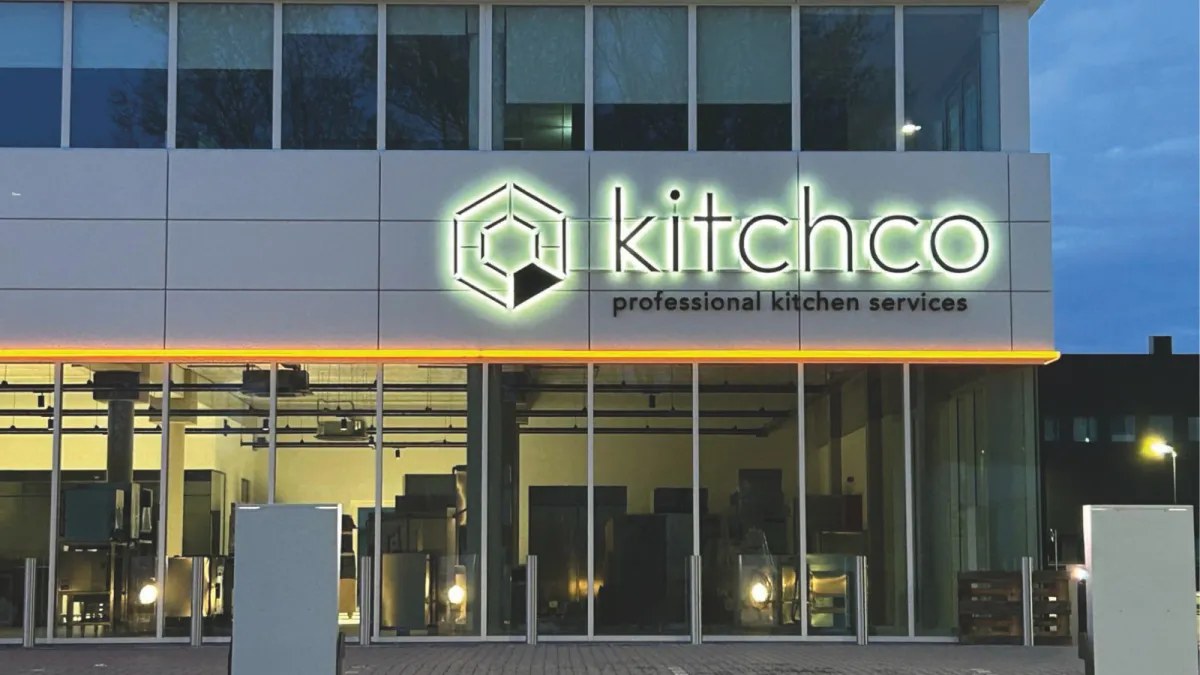
Light is the difference between being seen and being overlooked — especially in the dark months, when your façade sits in darkness for half of your opening hours. We make illuminated built-up letters, light boxes and LED applications that keep your name readable at five in the afternoon in November.
Choose your product type

Our approach
- 1Advice
We listen, measure up and think along.
- 23D design
Realistic visualisations for approval.
- 3Production
Custom work in our own workshops.
- 4Installation
Expert installation on site.
- 5Maintenance
Long-term service and maintenance.
What this gives you
From first sketch to maintenance — one partner who handles everything in-house.
One partner, from A to Z
You call one number. We measure, design, produce, install and maintain. No fragmented responsibility, no waiting on subcontractors pointing at each other.
You see it before it exists
A 3D visualisation of your own façade or space, by day and by night. We only start producing once that image is right. No surprises afterwards.
In-house production in Olen
Custom work from our own workshops, without intermediaries. That means a shorter lead time, a sharper price, and changes that are genuinely still possible.
Built to last
ISO 9001 and ISO 14001. Colourfast, weather-resistant materials and energy-efficient LED lighting. With long-term service and maintenance.
Illuminated signage: your name still working after dark
Illuminated signage is the most visible form of façade advertising. An unlit sign does its job between nine and five; an illuminated façade letter keeps working on a winter evening, in the rain, at the moment a passer-by actually needs your business. For hospitality, retail, garages, pharmacies and companies along an arterial road, that difference is considerable.
We design, produce and install illuminated signage for façades, buildings, totems and interiors, from a single light box above a shop door to the complete lettering of a company site. Everything is drawn and made in house, which means we remain responsible for the end result rather than referring you elsewhere.
The forms of illuminated signage
Light box
A closed case with a translucent face, lit from within. The classic, affordable workhorse: a lot of message for a limited investment, in rectangular or routed shapes. The face is replaceable, so a change of name or house style leaves the case in place.
Built-up letters
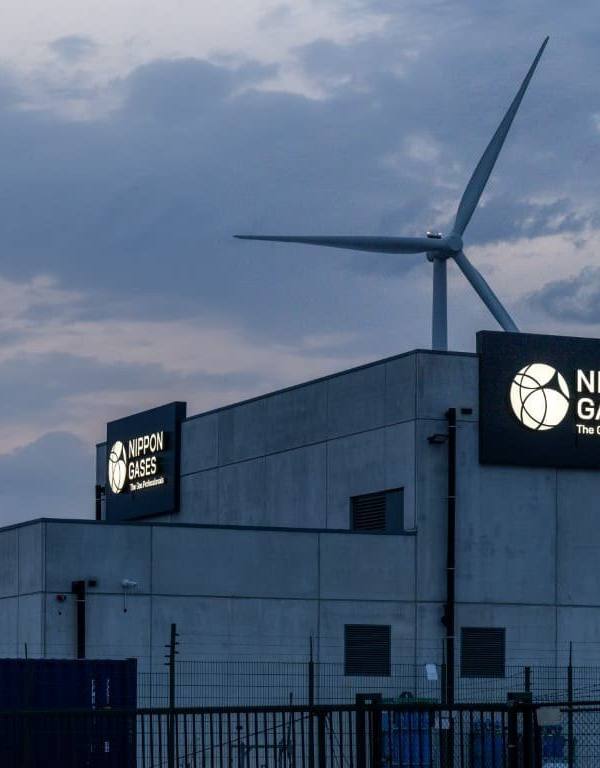
Individual three-dimensional letters, each lit separately and fixed to the façade. They look more refined than a case because the façade stays visible between the letters. There are two main versions: front-lit, where light comes forward through the face, and halo-lit, where light reflects onto the façade and the letter glows as a silhouette. The second is subtler and works exceptionally well on a light façade.
LED neon
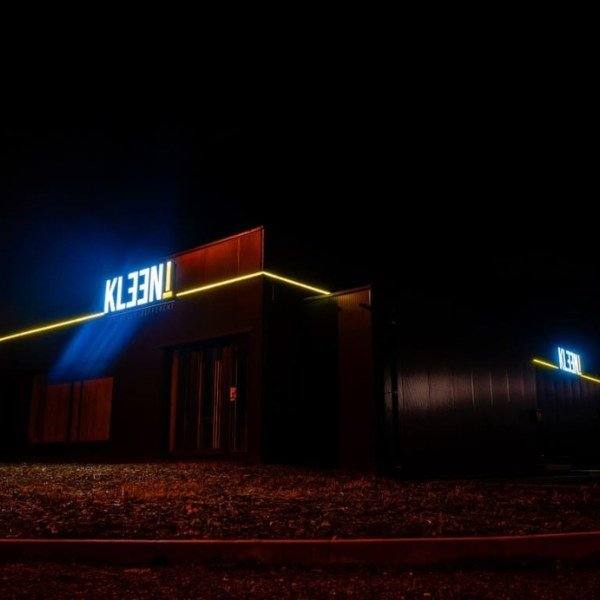
The modern successor to glass neon: a flexible light tube giving the same continuous line, but with far lower consumption, no high voltage and a considerably longer service life. Suited to handwritten logos, indoors and out.
Illuminated totems and columns
Freestanding elements at the entrance or in the car park, visible to anyone arriving by car. Often modular, so that several businesses on one site each get their own band.
Illuminated textile frames
A tensioned fabric in a frame, evenly backlit. The fabric changes in minutes, which makes this the logical choice for images that change by season or campaign.
The technology that determines quality
The difference between signage that still looks fresh after five years and signage that goes blotchy lies in details you cannot see at purchase.
- The LED modules and their spacing. Too few modules or too shallow a case produces visible hot spots on the face. We calculate the spacing rather than estimate it.
- The power supply. A sound driver with adequate reserve lasts years; a cheap one is the first to fail and takes the rest with it.
- The IP rating. Outdoor applications need an enclosure that keeps out water and dust, including at the cable entry.
- The colour temperature, expressed in kelvin. Warm white suits hospitality and traditional façades, neutral to cool white suits technology, healthcare and retail. We show you the difference before production, because it is hard to judge on paper.
- The support structure and façade fixing, matched to the type of façade, whether brick, insulated cladding, concrete or glass. A badly anchored light box damages the façade or works loose.
- The switching. A dusk switch or time clock cuts consumption and stops your sign burning all night on a deserted business park.
Permits and regulations
In Flanders, illuminated signage almost always requires a permit. The rules differ per municipality and are stricter in protected townscapes, along regional roads and on heritage buildings. Restrictions usually concern dimensions, projection over the public domain, light intensity, colour, and whether flashing or movement is allowed.
We are used to these procedures and help you assemble what the municipality asks for: a dimensioned façade elevation, a photomontage, a technical data sheet and a description of the fixing. We can also sound out the planning department informally beforehand, which often prevents a refusal. Start early: a permit process usually takes longer than production itself.
Consumption and maintenance
LED signage uses a fraction of what neon or fluorescent once required, but consumption is not zero. For a façade lit all year round, it pays to specify a time clock or dusk control at the design stage, and modules with good light output per watt.
Maintenance is limited but not absent: cleaning the face keeps brightness up, and after some years a driver or module may need replacing. We keep parts available and can arrange a maintenance agreement, including for installations we did not fit ourselves.
What determines the price?
Illuminated signage has no catalogue price, and an indicative figure would set you off on the wrong foot. Cost is driven by:
- The type: a light box, individual built-up letters or LED neon are three entirely different productions.
- The dimensions and the number of letters or modules.
- The construction and material choice, from aluminium to stainless steel.
- The amount of technology: number of modules, drivers, control.
- Installation: height, accessibility, whether a cherry picker is required, and whether work takes place over the public domain.
- The electrical supply on site. If a connection is missing, it is added to the project.
- The permit file, if you outsource that to us.
Send us a photograph of the façade with the intended position, your logo as a vector file and the available width, and you will receive a photomontage together with a well-founded quotation. That way you see the result before you decide.
Send us your façade
Send a few photographs of the façade and your logo. We will draw a proposal, indicate what is feasible in planning terms, and only then produce a price.
Projects
All projects
Frequently asked questions
Wat kost een verlichte gevelletter?
Hoelang gaat de LED-verlichting mee?
Kan de verlichting automatisch aan- en uitgaan?
Heb ik een vergunning nodig?
Further reading
You will find more background and practical tips in our articles.
Ready to start your illuminated signage project?
We think along from the first sketch through to installation and maintenance.