
Elections and ceremonies: prepared in time instead of last minute
Election boards, polling station signage and ceremonial materials: what you need, when to order and why the price differs.
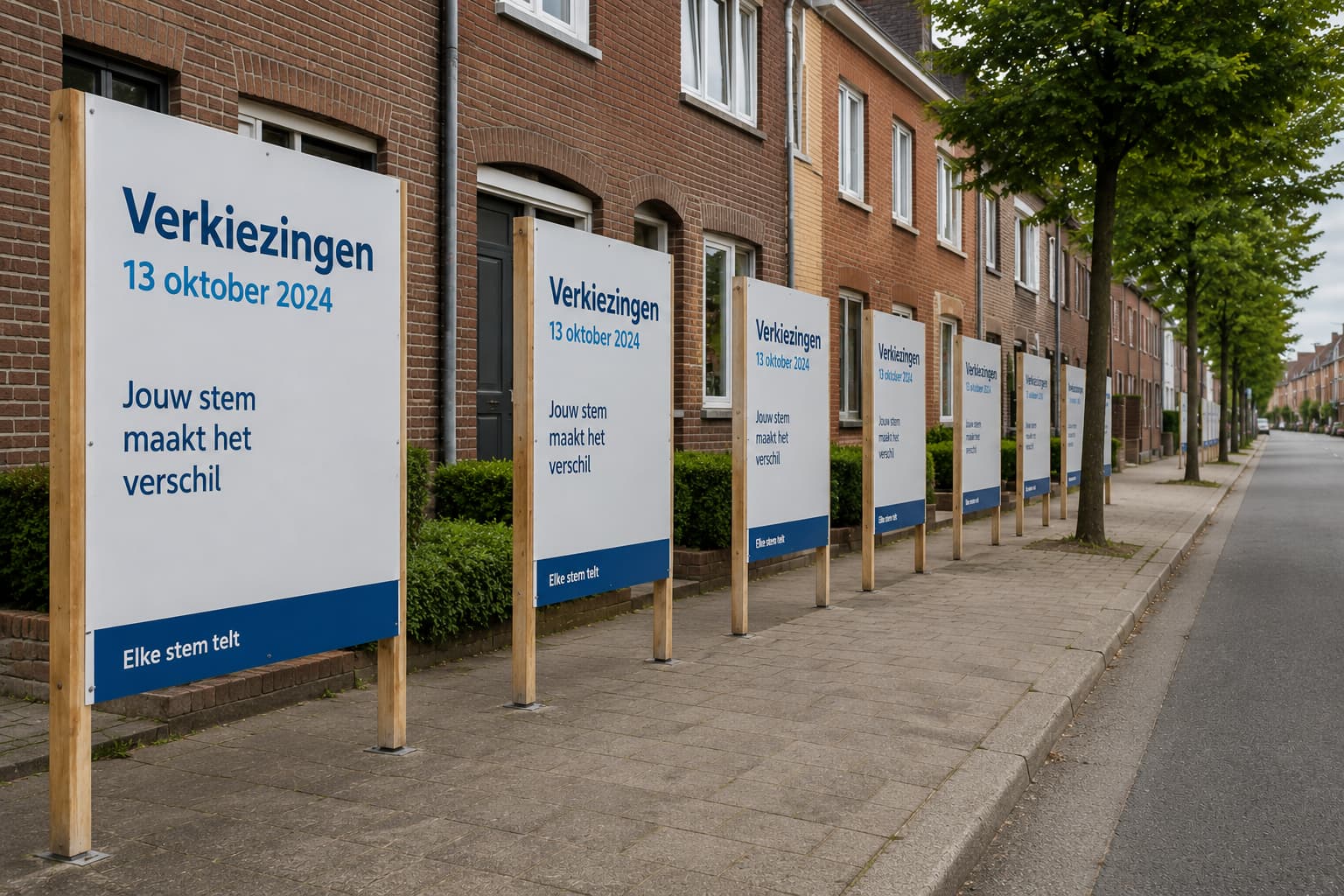
Of all the files a municipal department has to handle, this one is the most predictable. The date is set years in advance, the number of locations is known, and what is needed differs hardly at all from the previous time.
And yet it is the file that most often ends up against the clock. Not through poor management, but through a simple convergence: every municipality needs it at the same time. Whoever orders three weeks before the election date competes with three hundred other authorities for the same production capacity — and then it is no longer about price, but about whether it arrives on time.
This article sets out what is typically needed, when best to order, where it goes wrong in practice, and why the price varies so much.
What is typically needed
It falls into three blocks, each with its own logic.
Election boards for posting. The panels on which lists may put up their posters, in the locations designated by the authority. Usually a series of identical boards spread across the municipality, with a structure that has to stand outside for a few weeks and can then be taken away.
Signage for the polling stations. This is the most underestimated block and the one that makes the most difference on the day itself: directions to the building, directions to the right bureau inside, directions for queues, and the numbering of the bureaus. Whoever saves here pays it back in questions to the chairpersons and in queues in the wrong place.
Ceremonial and protocol materials. Flags, flagpole equipment, cordoning off at ceremonies, and the dressing of official moments. This is a recurring need that stands apart from the electoral cycle, but in planning often ends up in the same file.
Timing: the point that decides everything
One piece of advice carries more weight than all the rest in this article: start one to two budget years before the election.
The reason is capacity, not price. Election material is markedly seasonal: demand from the whole country falls in the same weeks. Production capacity, transport and installation crews are then scarce, and the authorities that pass on their numbers earliest have the most choice.
In practical terms, that means: determine well in advance how many boards you need and at which locations, and fix who installs and collects them. Those two decisions determine the largest part of the lead time.
A second argument for starting early is the quality of the tender. A file drawn up in haste falls back on the specification from last time, even when that specification did not work well last time.
Election boards: where the choice lies
Corrugated panels and lightweight plastic panels. The standard for short-term posting. Affordable, light, and meant to last a campaign period. For a one-off use, that is the logical choice.
Reusable panels on a frame. Heavier, and therefore more expensive to buy, but usable across several electoral cycles when stored correctly. For municipalities that plan ahead, this is often the cheaper option over two or three elections.
The structure underneath. This is where it goes wrong in practice and what is rarely specified. A panel standing on a light wooden frame blows over. A board that is properly anchored or sufficiently weighted stays put. So ask in the specification explicitly for the method of installation and the wind resistance, not just for the panel.
Installation and collection. That is a real cost item, and it is labour-intensive work in a short period. Fix in advance whether your own technical department does it or whether it is ordered along with it, because in practice the availability of your own staff in those weeks is limited.
And one thing that counts afterwards: where do the boards go? Panels that end up in a shed after the election, with no one knowing what state they are in, get ordered again next time anyway. A brief inventory with photos when putting them away is the cheapest saving in the whole file.
Signage for polling stations: the underestimated block
On the day itself, a large part of the population comes to buildings they rarely or never enter: schools, sports halls, community centres. They arrive in a hurry, often with children, and they do not know where to go.
What helps.
Directions outside, from the street and the car park. Where is the entrance, and is this the right building? That last point is not trivial in a municipality where three schools look alike.
Clear bureau numbering. Large, at eye level, and consistent with the layout used on the polling card. If the card refers to bureau 12 and the door says "room B", that is a question asked a hundred times.
Queue management. Where does the queue start, and where does it lead. A few cordon elements and arrows prevent the queue from blocking a passage or an emergency exit.
Accessibility. Indication of the accessible entrance, and of where to go for anyone who needs assistance.
Reusability. Bureau numbers, arrows and general directions without a date can be used across several elections. So do not put a year on them. That one detail saves a full order on every subsequent cycle.
Ceremonial material
Flags and flagpole equipment at public buildings, cordoning and dressing at ceremonies, and materials for commemorations and official moments.
Two points come up often here. The protocol — the order and the height at which flags hang — differs according to the occasion and the level of government; it is useful to fix that properly once, rather than work it out afresh for each occasion. And the state of the material: a faded or frayed flag at a ceremony stands out, precisely because it is a moment when people are looking.
Practical advice: go through the flags and flagpole equipment once a year, preferably well before the period with the most ceremonies, and replace what is worn out. That is a small, plannable expense that makes a visible difference.
Where it goes wrong in practice
Ordering too late. The most important one, and the only one entirely within your control.
Numbers that do not add up. The number of locations from the previous cycle is taken over without checking whether schools have been added or have disappeared.
No agreement on installation and collection. So that the boards go up too late or stay for weeks after the election — and that last point generates complaints.
Material stored damp. Panels and fabrics put away wet after the previous cycle have become unusable without anyone checking.
Dates on reusable material. A single year on a board makes it unusable for next time.
Why the price varies so much
The material and the execution. One-off panels and reusable versions are in a different order of magnitude, and the second is usually cheaper across several cycles.
The number. The biggest factor: the start-up cost spreads across the run.
The structure and the method of installation. Anchoring or weighting, and whether the board goes on hardstanding or in the verge.
Installation and collection. Labour-intensive work in a short period, and a real cost item.
The signage for the bureaus. Number of locations, number of bureaus, and whether it is produced reusably.
The timing. Material ordered early is easier to plan; last minute means less choice and less room to manoeuvre.
That is why we work with a proposal tailored to your municipality rather than a rate per board. The concrete figures are found in the Herva-Doublet Platform.
From calendar to order
The most useful first step is a list: the number of posting boards and their locations, the number of polling sites with the number of bureaus per site, and the question of who installs and collects. With those three pieces of data, a full proposal is possible, including what can be produced reusably.
Election material, signage, flags, cordoning and ceremonial material come from us in a single hand, from production to installation. One point of contact, one file — and material that is still there next time.
Frequently asked questions
Further reading
Related articles
Ready to take the next step?
Request a 3D design or an advisory meeting, or request access to prices in the Herva-Doublet Platform.